How Long Do Homeowners’ Insurance Claims Stay on Your Record?
How long do homeowners’ insurance claims stay on your record? Typically, these claims remain on your record for five to seven years, although some can extend up to 10 years depending on their severity. Knowing this duration is crucial for managing your insurance policies and understanding potential impacts on premiums.

For a free legal consultation, call (832) 323-3000
For a free legal consultation, call (832) 323-3000
Key Takeaways
✓ Homeowners insurance claims typically remain on your record for five to seven years, with potential extensions for significant claims.
✓ Filing claims can lead to premium increases of roughly 9% to 20%, particularly for liability claims, making it essential to weigh the cost-benefit of each claim decision.
✓ Homeowners can access their claims history through reports like CLUE and A-PLUS, allowing them to monitor and dispute inaccuracies to help ensure fair premiums.
Understanding Home Insurance Claims
Home insurance claims provide crucial financial support when unexpected events occur. By pooling premiums from all policyholders, the insurer can cover the cost of damages after deductibles, preventing homeowners from shouldering the full financial burden of major repairs alone. Filing a claim generally involves documenting the damage, contacting your insurer, and submitting the required paperwork. Types of claims include liability, theft, and natural disasters, each with specific coverage.
Each filed claim is recorded, contributing to your claims history. Insurers assess this record to determine risk profiles, which influences both current coverage and future premiums—so understanding the process affects both how efficiently claims are settled and the long-term cost of maintaining your insurance.

Click to contact our property damage lawyers today
Duration of Homeowners Insurance Claims on Record
Home insurance claims usually stay on your record for five to seven years, though certain circumstances can extend this to 10 years or more. The severity and nature of the claim significantly influence how long it lingers—claims with substantial payouts and extensive damage tend to stay longer. Insurers review recent claims history to assess risk and set premiums; some consider only the past three years, while others look further back.
Natural disaster or major property damage claims, including storm damage, usually remain on record longer than smaller claims, such as theft or personal liability. Frequent non-catastrophic claims can lead to higher costs, underscoring the importance of maintaining a clean claims record and knowing when filing is worth it.
Complete a Free Case Evaluation form now
Impact of Claims on Insurance Premiums
Filing a home insurance claim can significantly impact your premiums, potentially increasing them by roughly 9% to 20%. The type and frequency of claims and your overall claims history are key factors. How Long Do Homeowners’ Insurance Claims Stay on Your Record? Filing multiple claims in a short period can mark you as a high-risk policyholder and lead to steeper hikes. Liability claims often lead to the largest increases due to high costs such as legal fees and medical bills.
That said, in some regions, regulations may prevent insurers from raising premiums after certain claims, such as those related to natural disasters, thereby providing relief for homeowners in disaster-prone areas. When considering whether to file, weigh the immediate benefit against potential long-term costs.
How to Access Your Claims History
Accessing your claims history is straightforward with tools like the CLUE report and A-PLUS Property report. A CLUE (Comprehensive Loss Underwriting Exchange) report compiles your home insurance claims history, claim numbers, dates of loss, claim amounts, and causes of loss, helping you understand your recent history and its potential impact on premiums. The A-PLUS Property report offers up to seven years of data across various claim types.
Homeowners can request these reports for free to review their history and ensure accuracy. Regularly reviewing them keeps you informed and encourages proactive steps to maintain a clean record, which can result in better rates and fewer surprises at renewal.
Disputing Errors in Your Claims Report
Mistakes in your claims report can happen, but you can challenge inaccuracies under the Fair Credit Reporting Act (FCRA). If you find an error, gather evidence such as photographs, repair invoices, or correspondence with your insurer, then prepare a detailed dispute letter and submit it to the reporting agency (such as LexisNexis). The agency must investigate and respond within a specific timeframe.
Ensuring your report is accurate is essential for fair premiums. If a dispute remains unresolved, you may want to consult a consumer protection attorney, who can help you understand your rights to challenge an insurer’s decision more broadly.
Types of Claims and Their Effects
Different home insurance claims affect premiums in various ways. Liability claims can significantly increase premiums due to high costs such as legal fees and medical bills, while fire-related claims may affect premiums differently from theft claims, depending on the insurer’s criteria. Some states limit insurers’ ability to raise rates after certain claims, such as those for natural disasters and wind damage, benefiting homeowners in severe-weather areas. For a sense of how storm claims are paid out, see our guide to the average insurance payout for a hail-damaged roof. The size of the claim also matters—larger claims usually lead to larger increases, and frequent claims can classify you as high risk.
Strategies to Minimize the Impact of Claims
Maintaining a clean claims record helps keep premiums affordable. Regular home maintenance prevents small issues from becoming costly claims—periodic checks on smoke detectors can prevent fire-related claims, and security systems can reduce the risk of theft while potentially qualifying you for discounts. Using downspout extenders to drain water away from your home reduces the risk of water damage, and elevating appliances helps prevent flood damage. These proactive measures protect your home and help maintain a favorable insurance profile, reducing both the frequency and severity of claims.
Click to contact our property damage lawyers today
When to File a Claim vs. Paying Out-of-Pocket
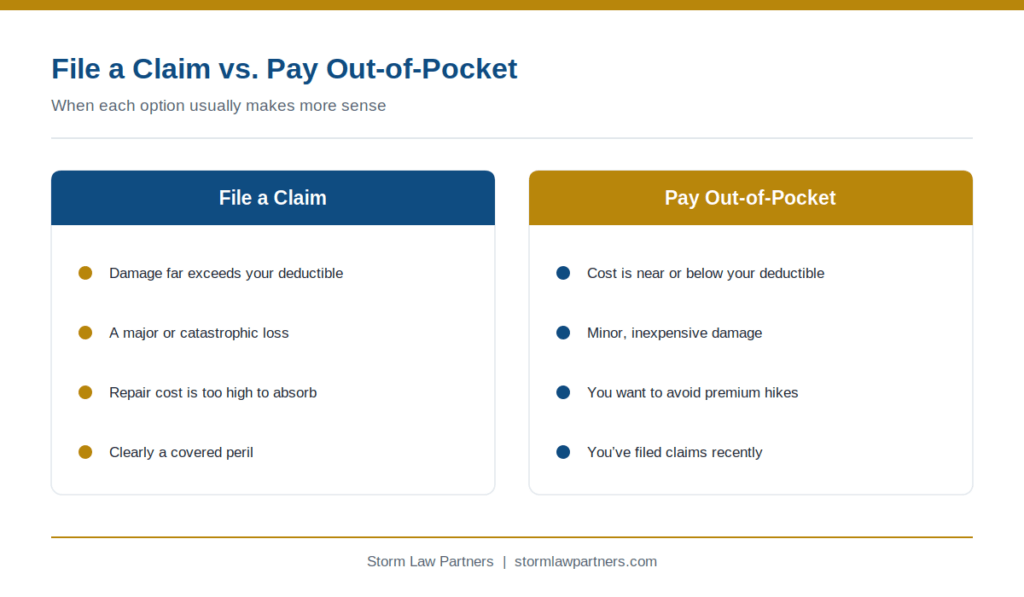
Deciding whether to file a claim or pay out of pocket is an important decision. If estimated repair costs are lower than your deductible, it’s usually more prudent to handle the expense yourself. Filing makes more sense when the cost of substantial damage clearly exceeds your deductible.
Frequent claims can negatively affect your record, complicating and raising the cost of future claims. For smaller losses close to your deductible, paying out of pocket may be wiser than risking higher premiums. Consider your deductible, your claims history, and whether you can afford the out-of-pocket expense when making the decision.
Attorney Insights: What the Best in the Business Recommend
As a seasoned first-party insurance attorney, here are the top actions I advise homeowners to take when it comes to claims and how they affect their long-term record:
- Ask for a Claims Impact Letter: Before filing, request a written explanation of how the claim might impact your future premiums or eligibility.
- Bundle and Time Strategically: If you must file multiple claims, space them out or bundle damage under a single claim when possible to avoid being labeled “high-risk.”
- Get a Pre-Claim Inspection: Some insurers offer inspections before filing—use this to assess minor damage and explore repair options privately.
- Always Get a Second Opinion: Don’t rely solely on your insurer’s adjuster. Independent estimates can prevent undervaluation and disputes.
- Monitor Your CLUE and A-PLUS Reports Regularly: Insurers may report even inquiries—catch these early to dispute errors before they affect premiums.
Real-World Example
In 2021, a Michigan homeowner filed three small claims over 18 months—each under $2,000. By the third, their premium had increased by 35%, and they were dropped at renewal. After a legal review, they discovered their insurer had flagged them as high-risk. With legal help, they successfully disputed a duplicate entry in their CLUE report, helping them secure more affordable coverage elsewhere.
Case Law Reference
In Safeco Ins. Co. of Am. v. Burr, 551 U.S. 47 (2007), the U.S. Supreme Court addressed insurers’ obligations under the Fair Credit Reporting Act, including when a consumer must be notified that information from a consumer report—like a CLUE report—was used in an adverse decision. This reinforces your right to transparency and recourse if claims-history reports unfairly affect your premiums.
Important Statistic
Industry research suggests that many homeowners are unaware that even inquiries—not just filed claims—can appear on their insurance records and affect their rates. That makes pre-claim strategy and regular monitoring of your insurance file more important than ever.
Summary
Navigating homeowners’ insurance claims can be complex, but understanding the basics makes a real difference. From knowing how long claims stay on your record to understanding their impact on premiums, this knowledge empowers you to make informed decisions. Maintaining a clean claims record, performing regular maintenance, and knowing when to file versus paying out of pocket are all strategies that help keep premiums affordable.
By applying these insights, you can keep the coverage you need while managing costs effectively. Stay proactive in monitoring your claims history and addressing any discrepancies to maintain a fair, accurate insurance profile—protecting both your home and your financial well-being.
Frequently Asked Questions
How long do home insurance claims stay on your record?
Home insurance claims generally remain on your record for 5 to 7 years, though they may last up to 10 years or more, depending on their severity and nature. It’s important to keep this timeframe in mind when considering future insurance options.
How do different types of claims affect my insurance premiums?
Different claims affect premiums in different ways. Liability claims typically lead to substantial increases, while fire or theft claims may vary based on the insurer’s assessment criteria. Understanding these nuances helps you anticipate potential changes.
How can I access my home insurance claims history?
You can access your history by obtaining a CLUE report or an A-PLUS Property report, both of which provide detailed information about your past claims and are available free of charge.
What should I do if I find an error in my claims report?
Gather evidence and prepare a detailed dispute letter to file with the reporting agency (such as LexisNexis), which is obligated to investigate and respond within a designated timeframe. Taking these steps helps ensure the issue is addressed properly.
When should I file a home insurance claim rather than pay out of pocket?
File a claim when the damage is significant and exceeds your deductible. For minor damage near the deductible amount, it’s often more prudent to pay out of pocket to avoid potential premium increases.
Call or text (832) 323-3000 or complete a Free Case Evaluation form