Insurance Sent Me a Check for My Roof — Now What?
Insurance sent me a check for my roof; now what? Start by understanding your check, then hire a reliable contractor, and follow up with proper project execution. This guide covers all these steps.

For a free legal consultation, call (832) 323-3000
For a free legal consultation, call (832) 323-3000
Key Takeaways
✓ Understand your insurance check structure, including the impact of policy types like ACV and RCV on your out-of-pocket costs.
✓ Choose a licensed and insured roofing contractor, ask for references, and clarify warranties to ensure quality work and avoid potential issues.
✓ Document damages, review insurance estimates thoroughly, and submit invoices promptly to ensure successful claim processing and full payment.
Understanding Your Insurance Check
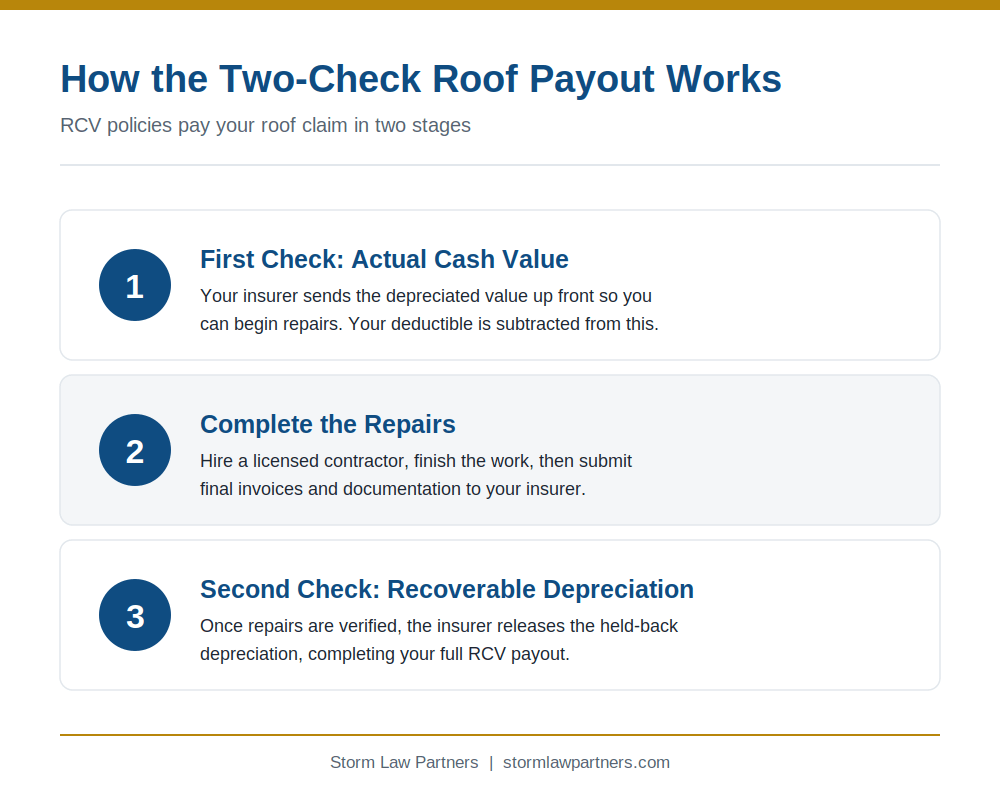
Insurance checks are often divided into two payments to ensure funds are used appropriately. The first check helps start the repair process, while the second check—the recoverable depreciation—is issued after repairs are completed.
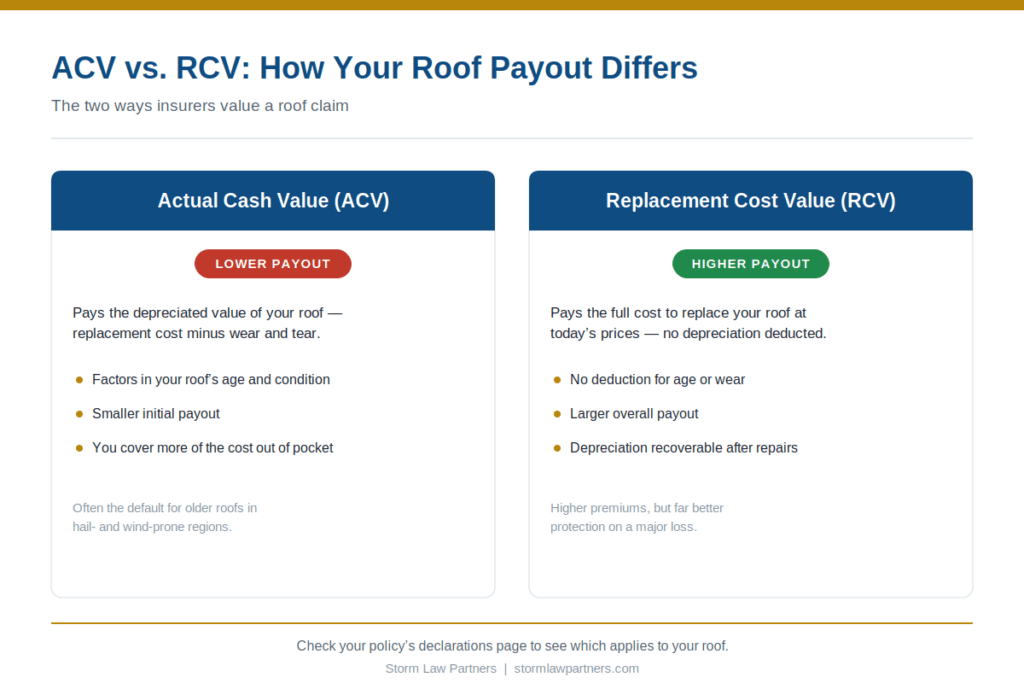
It’s important to know your policy type. Actual Cash Value (ACV) policies provide the depreciated value of your roof, covering less than the full replacement cost. Replacement Cost Value (RCV) policies cover the full replacement cost without depreciation, which directly affects your out-of-pocket expenses.
Your deductible is the amount you pay before insurance coverage starts. Depreciation is the difference between the replacement cost and the actual cash value. Keeping the insurance money without making necessary repairs means missing out on the recoverable depreciation—completing repairs ensures you receive the full benefit of your coverage. For context on typical settlement amounts, see the average insurance payout for hail damage to a roof.
Click to contact our property damage lawyers today
 What to Do Before Hiring a Roofing Contractor
Selecting the right roofing contractor is crucial before starting roof repairs. Ensure your contractor holds all necessary state and local licenses to comply with regulations for your peace of mind.
Contractors experienced with insurance claims can help avoid miscommunication and potential issues. Choose contractors with at least $1 million in general liability insurance to protect against damages.
Ask for references from past clients to verify reliability and workmanship quality. Ensure clear communication with your contractor, addressing all questions and concerns. Additionally, understand the differences between the contractor’s workmanship warranty and the manufacturer’s warranty.
Lastly, consider contractors who offer financing options, as this may indicate financial stability and can help manage project costs.
Complete a Free Case Evaluation form now
Reviewing Your Insurance Estimate
Thoroughly review your homeowner’s insurance estimate to avoid misunderstandings and frustration. Know what damages are covered and any applicable deductibles. Proper documentation—including clear photos, insurance paperwork, and thorough records, is crucial for a successful claim that covers all necessary repairs.
Insurance adjusters set the scope and price of the initial inspection, so address discrepancies immediately. Clear expectations regarding coverage and line-item costs help identify issues quickly. If discrepancies arise between the contractor’s and insurance estimates, your contractor can contact the insurance adjuster directly.
Requesting a full roof replacement when only repairs are needed can lead to disputes; a professional assessment clarifies the necessary actions. Ensure local codes, labor, dump fees, overhead, profit, and full cost are included when supplementing your insurance claim.
Scheduling a Roof Inspection
Schedule a roof inspection soon after a storm to assess potential storm damage. File your claim within your insurance company’s timeframe, and choose a local contractor for quicker responses to inspection requests.
Confirm the roofing contractor has the necessary insurance and licensing before scheduling the inspection. Contractors should perform a comprehensive inspection, checking all components and explaining the importance of proper attic ventilation.
Document visible roof damage with photos before the inspection. This supports your roof insurance claim and helps the contractor provide an accurate damage assessment.
Paying Your Deductible
Paying your deductible is mandatory. Some contractors might offer to cover it, but accepting this can lead to legal repercussions, as it is illegal and constitutes insurance fraud.
Allowing a contractor to pay your deductible can void your warranty or result in improperly filed paperwork. Pay your deductible directly to the roofing company before the job starts. Understand payment terms beforehand, and never pay the full amount upfront.
Completing the Roofing Project
After selecting a contractor and paying your deductible, proceed with the roofing project. Contractors should provide a detailed written estimate outlining the scope of work and materials. Discuss how to handle unexpected issues, such as hidden poor-quality plywood decking, that may affect costs.
Clear communication with your roofing contractor minimizes confusion about project scope and costs. Discuss the timeline to understand potential delays. Final costs could be higher due to additional repairs, so be prepared to manage expectations and avoid surprises.
Submitting Invoices and Receiving Final Payment
After completing the roofing project, submit invoices and receive the final payment. Send the contractor’s invoice directly to your insurance company for processing. Once you receive the final check, give it to your contractor to complete the payment.
If you have a mortgage, endorse the check and provide the necessary documentation for the mortgage company to release funds. Settlement checks are typically valid for 180 days, so cash them promptly to avoid complications.
Failure to pay the contractor in full within 30 days of completion may result in a penalty and could place a lien on your property. Letting the insurance check expire means the bank won’t honor it, which requires a lengthy reissue process.
Common Issues and How to Resolve Them
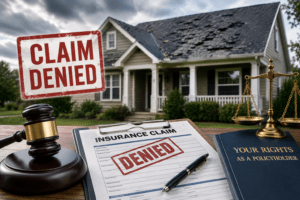
Even with the best preparation, issues can arise. Claims may be denied if the roof is too old, as many policies have age limits. If denied, contact your insurance agent or broker; if unresolved, consult an insurance law attorney and consider your options for suing an insurance company for denying a claim. You can also negotiate the settlement offer for a more favorable outcome.
Supplement your insurance claim to include all necessary line items and adjustments for fair compensation. A reputable roofing contractor can help identify missing items to ensure a complete claim. Confirm that any code upgrades are included if covered by your policy.
Maintaining Your New Roof
Maintaining your new roof is crucial for longevity. Regularly clean gutters to prevent water buildup under the shingles, remove organic debris to avoid moisture retention, and limit foot traffic to preserve the protective granules on the shingles.
Inspect flashings around chimneys and vents to ensure they are secure and watertight. Proper attic ventilation prevents mold and ice dams, protecting the roof’s structure. Downspouts should direct runoff away from the roof to minimize water pooling and shingle degradation.
Pro Tips from a First-Party Insurance Attorney
As a first-party property insurance attorney, here are key strategies I recommend for homeowners managing insurance roof claims:
- Request a Scope of Loss: Ask your insurer for a detailed breakdown of all damage evaluations. This document is essential for comparing estimates and holding the insurer accountable.
- Watch for “Non-Recoverable” Depreciation: Know whether any part of your depreciation is not recoverable under your policy, as it impacts your final payout.
- Check for Matching Coverage: Some policies include “matching” provisions that require the replacement of undamaged shingles to ensure a uniform appearance. Enforcing this can boost your payout.
- Use a Licensed Public Adjuster: If you’re unsure about the insurer’s estimate, hiring a public adjuster can provide an unbiased evaluation and increase your claim amount.
- Don’t Sign Over Benefits Blindly: Be cautious with Assignment of Benefits (AOB) forms. These give contractors legal rights over your claim and can complicate disputes.
Real-World Example
After a major hailstorm in Colorado in 2021, a homeowner received an initial ACV check of $9,200—well below the true repair cost. With the help of a licensed public adjuster and after submitting the required supplements and documentation, the final payout exceeded $22,000, covering all code upgrades and a full roof replacement.
Relevant Case Law
In Johnson v. State Farm Lloyds, 204 S.W.3d 897 (Tex. 2006), the Texas Supreme Court addressed an insurer’s obligations regarding roof replacement when matching damages affect a property’s appearance and value. This precedent is often cited in support of a policyholder’s right to full coverage under aesthetic or uniformity clauses.
Important Statistic
A widely cited report from the National Association of Public Insurance Adjusters (NAPIA) found that policyholders who used a licensed public adjuster received significantly higher settlements than those who did not, particularly for roof-related claims.
Summary
Navigating the roof insurance claim process can be challenging, but with the right knowledge and steps, you can keep everything on track. From understanding your insurance check and policy type to reviewing your estimate, choosing a reputable contractor, and submitting invoices, each step protects your right to a full and fair payout.
Maintaining your new roof is just as important as the initial repairs. Regular maintenance extends the life of your roof and helps prevent future issues. Stay proactive, keep clear communication throughout the project, and your roof will protect your home for years to come.
Frequently Asked Questions
Why are insurance payments divided into two checks?
Insurance payments are typically split into two checks to make sure the money is used for repairs. The second check—the recoverable depreciation—is released once the work is finished, ensuring repairs are actually completed before the full amount is paid out.
What should I look for when hiring a roofing contractor?
Make sure they have the right licenses, insurance, and experience with insurance claims. Ask for references and prioritize clear communication throughout the process.
How can I ensure my insurance estimate is accurate?
Understand your policy, document all damages thoroughly, and discuss any discrepancies with the adjuster. Make sure all relevant costs—like local codes and labor—are included in the estimate.
What should I do if my insurance claim is denied?
Reach out to your insurance agent to discuss why it was denied. If that doesn’t resolve the issue, consider seeking advice from an attorney who specializes in insurance law.
How can I maintain my new roof?
Regularly clean gutters and inspect flashings around chimneys and vents. Limit foot traffic and ensure proper attic ventilation to keep everything in good shape.
Call or text (832) 323-3000 or complete a Free Case Evaluation form
Call or text (832) 323-3000 or complete a Free Case Evaluation form