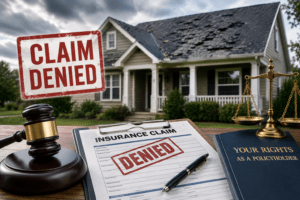
When an insurance adjuster says no hail damage, what should you do? This article explains the common reasons for denials, how to gather compelling evidence, and the steps to dispute an unfair decision. Keep reading to navigate this challenging situation and fight for your rightful claim.
For a free legal consultation, call (832) 323-3000
Key Takeaways
✓ Insurance adjusters commonly deny hail damage claims due to factors like policy exclusions, insufficient evidence, or misinterpretation of damage.
✓ Homeowners can dispute denied claims by gathering comprehensive evidence, requesting detailed explanations, and understanding their insurance policy’s specifics.
✓ Legal options such as consulting with an attorney, filing a bad faith lawsuit, and mediation can be pursued if a hail damage claim is unjustly denied.
For a free legal consultation, call (832) 323-3000
Understanding Why Insurance Adjusters Deny Hail Damage Claims
Insurance companies often prioritize their financial interests, which can increase the likelihood of denying hail damage claims. Homeowners need to recognize hail damage to effectively dispute the common reasons behind these denials. Insurance adjusters may attribute damage to normal wear and tear, which isn’t covered by most homeowners’ insurance policies. Additionally, issues such as claim timeliness, premium payments, or deductible amounts can serve as grounds for denial. Recognizing these reasons helps in preparing to dispute a denied claim.
Policy Exclusions and Limitations
Insurance policies often contain specific exclusions that can impact the outcome of hail damage claims. One such exclusion is the cosmetic damage exclusion, which limits coverage to structural damage only, dismissing any damage deemed cosmetic. This can significantly affect the extent of coverage and the costs the insurance company covers. Moreover, if hail damage is combined with normal wear and tear, insurers may pay only for the portion attributable to hail, further complicating the claims process.
Knowing these exclusions and limitations in your insurance policy is crucial. Factors such as hail size and your roof’s construction materials can also influence how damage is assessed. Familiarity with these nuances can help you better prepare your claim and challenge any unjust denials.
Insufficient Evidence of Damage
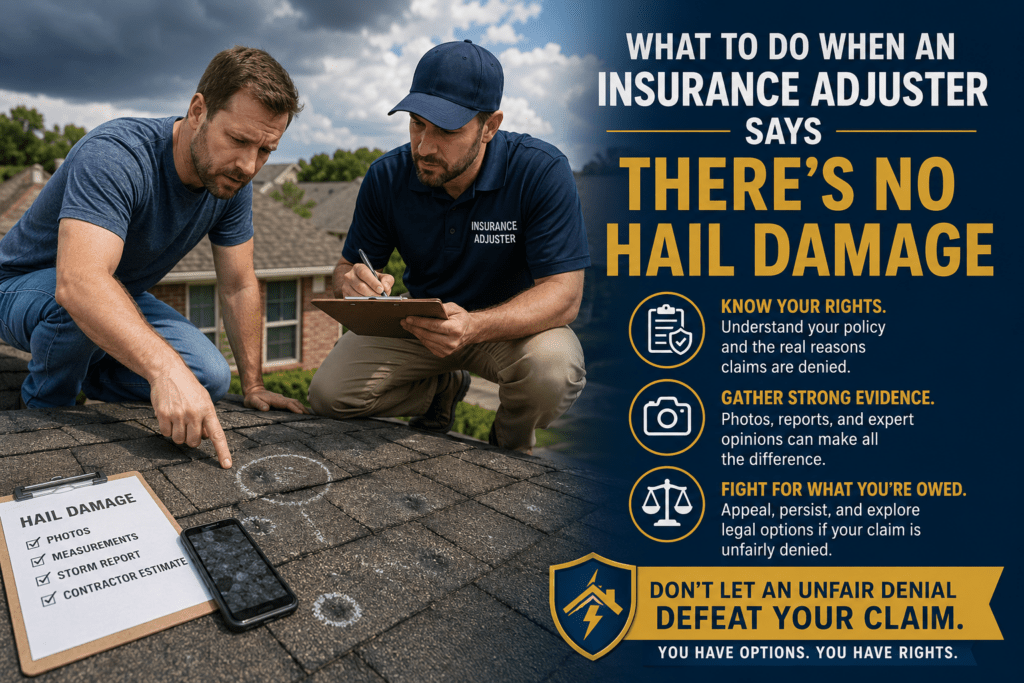
One of the most common reasons for hail damage claims being denied is insufficient evidence. Comprehensive documentation is key to supporting your hail damage claim. This includes taking photos and videos of the damage immediately after the hailstorm and making a detailed list of all affected items. Capturing all relevant details is essential.
Collecting evidence involves more than just taking photos. You should also take proactive measures to prevent further damage, such as temporary repairs or covering damaged areas to prevent water leaks. This supports your claim and demonstrates your efforts to mitigate further damage.
Misinterpretation of Damage by the Adjuster
Insurance adjusters are tasked with inspecting hail damage, evaluating its causes, and estimating repair costs. However, they might misclassify hail damage as normal wear and tear, significantly impacting the claim outcome. Some insurance companies differentiate hail damage from normal wear and tear or aging, which can lead to incorrect classifications and claim denials.
Homeowners should be aware of these potential misclassifications. Adjusters might overlook more severe structural damage, focusing only on what they perceive as cosmetic issues. Being knowledgeable about these misinterpretations can help you challenge them effectively and ensure a fair evaluation of your claim.
Steps to Take When Your Hail Damage Claim Is Denied
When your hail damage claim is denied, it’s important not to panic. Knowing the specific reasons for the denial is critical for a successful appeal. Common reasons include claims not being submitted within the required timeframes or insufficient evidence. Keeping detailed records of all evidence and interactions related to your claim denial is vital for future reference. If you believe your claim was unjustly denied, you can file a complaint with your state’s Department of Insurance. Understanding the steps to take after a denial can help you navigate the appeals process more effectively.
Request a Detailed Explanation from the Insurance Company
After a denial, request a detailed explanation from the insurance company. They must provide a clear reason for denying the claim. This explanation will help you understand the insurer’s perspective and identify any areas where you can strengthen your case.
An attorney specializing in insurance claims can provide essential advice on navigating the complexities of your case. They can help you understand your policy rights and the insurance company’s legal obligations, ensuring you are fully informed before proceeding with an appeal.
Gather Additional Evidence
Additional evidence is essential to strengthen your hail damage claim and dispute the adjuster’s denial. Types of evidence to gather include timestamped photographs of the damage, videos, and professional contractor estimates. It also helps to know the average insurance payout for hail damage to a roof so you can benchmark whether an offer is fair. Comprehensive evidence and a detailed explanation in your appeal letter can significantly bolster your case.
Maintaining detailed records of repair dates, roof condition, and communications with your insurance provider can significantly aid the claims process. This documentation supports your claim and demonstrates your responsible actions to address the damage.
Get a Second Opinion from a Public Adjuster
Hiring a public adjuster can help in obtaining an independent assessment of hail damage claims. A public adjuster offers an unbiased assessment of hail damage and can challenge underestimations by insurance adjusters. They assess damage, prepare repair cost estimates, and negotiate with insurance companies on behalf of the homeowner.
Public adjusters can often negotiate better settlements than what the insurance company initially offers. Consider hiring a public adjuster if you believe your severe hail damage has been undervalued by your insurer.
Click to contact our property damage lawyers today
How to Appeal a Denied Hail Damage Claim
You can appeal the decision if your hail damage claim is denied. Strong evidence is essential for a successful appeal. Persistence and a thorough understanding of your insurer’s appeals process are crucial for challenging a denied claim.
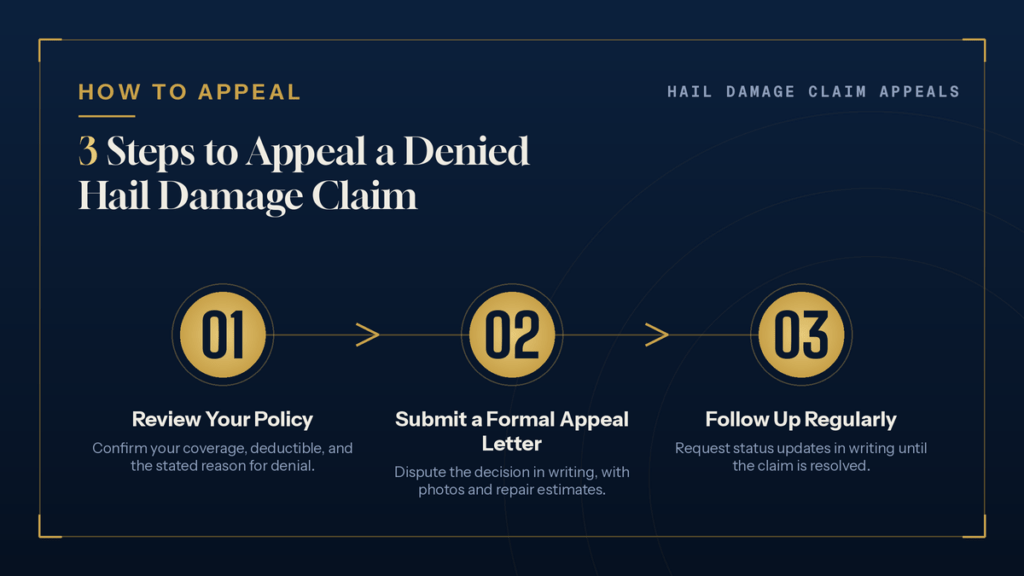
Review Your Insurance Policy
Reviewing details such as coverage limits and exclusions in your insurance policy helps you avoid surprises during claims. Homeowners should be aware of specific clauses regarding hail damage, as they can vary significantly. Understanding your policy’s details, including coverage limits and exclusions, can prevent unexpected claim denials.
Identifying any endorsements in your policy can clarify potential changes to your coverage that might affect claims. This knowledge will help you build a stronger case during the appeal process.
Submit a Formal Appeal Letter
Careful planning and meticulous documentation are critical for successful claim recovery. When submitting a formal appeal letter, include all gathered evidence and clearly explain why you believe the claim was unjustly denied. This letter should be professional and detailed to ensure it is taken seriously by the insurance company.
A public adjuster can significantly increase settlement payouts for hail damage claims and help ensure a fair outcome. Their expertise can provide valuable support during the appeals process.
Follow Up Regularly with the Insurance Company
Staying in regular contact with your insurance provider ensures your appeal is being processed and can prompt quicker responses. Consistent follow-ups keep your appeal on track and ensure timely responses.
Staying in touch with the insurance company allows you to address any additional questions or requests, expediting the appeals process.
Click to contact our property damage lawyers today
Complete a Free Case Evaluation form now
Legal Options if Your Hail Damage Claim Is Unjustly Denied
If your hail damage claim is unjustly denied, you have legal options to consider. Homeowners can pursue legal action if their claims are denied unfairly. Knowing these options empowers you to take action against unjust claim denials.
Consulting with an Attorney Specializing in Insurance Claims
An attorney specializing in insurance claims can provide expert guidance during the claims process. If you disagree with a hail claim decision, consulting an attorney can help you explore your options. An attorney can clarify your rights and obligations under your insurance policy, ensuring you’re fully informed. Legal representation can significantly improve your chances of a successful appeal.
Filing a Bad Faith Lawsuit
A bad-faith lawsuit can be filed if the insurer has unjustly denied your claim. You may file a lawsuit if you believe your claim was denied without reasonable justification. Understanding your rights when suing an insurance company for denying a claim helps you weigh this option. Successful bad-faith lawsuits can recover both the amount of the denied claim and additional damages.
Mediation and Arbitration
Mediation helps policyholders and insurers resolve disputes with a neutral third party, who helps both sides reach a voluntary agreement. In arbitration, a neutral arbitrator makes a binding decision on the dispute. Both can resolve a claim without the time and cost of a full trial.
Preventing Future Hail Damage Claim Denials
Proactive steps can help ensure that future hail damage claims are not denied. Regular roof inspections identify vulnerabilities and allow for timely repairs, minimizing potential storm damage and helping prevent future claim denials.
Regular Roof Inspections and Maintenance
Older or poorly maintained roofs may not be fully covered by insurance policies, so keeping your roof in good condition is crucial for adequate coverage. Regular roof inspections help identify and address potential issues before they escalate, keeping your roof in good condition and strengthening your position for a hail damage claim.
Routine inspections and documentation of your roof’s state can serve as vital evidence for future insurance claims.
Keeping Detailed Records and Documentation
Document all communication with the insurance company to provide evidence of their responses and claims handling. Thorough records are crucial for strengthening your hail damage claim and effectively addressing denials. Maintain records of all hail-damage repairs and inspections, as well as communication records.
These detailed records help dispute denials and provide a clear history of your property’s condition and treatment.
Understanding Your Insurance Coverage
Understanding your insurance policy helps homeowners avoid surprises when submitting claims. Policies often include exclusions that can lead to claim denials, so homeowners must be aware of these limitations. Comprehensive documentation is vital, as claims may be denied without sufficient evidence of hail damage.
Regularly reviewing and understanding your policy prepares homeowners for potential coverage issues during claims.
Attorney Insights: Expert Tips for Challenging Hail Damage Claim Denials
As a first-party property insurance attorney, here are the top strategies I recommend to maximize your chances of reversing a denial when an insurance adjuster claims there’s no hail damage:
- Request a Line-by-Line Explanation: Ask the insurer to provide a written breakdown of their denial, citing specific policy language and physical evidence.
- Hire a Licensed Roofing Contractor: A contractor’s detailed report can serve as expert evidence—especially if it includes photos, measurements, and material analysis.
- Use a Meteorological Report: A weather report from the day of the storm can confirm the presence and severity of hail in your area.
- Check for Matching Coverage: Some policies cover full replacement if shingles can’t be matched. Leverage this to dispute partial repairs.
- Track Patterns of Denials: If the same adjuster or insurer has a reputation for frequent denials, this may help support a claim of bad faith.
Real-World Example
In 2022, a homeowner in Oklahoma had their hail damage claim denied on the grounds that the marks were “cosmetic.” After hiring a public adjuster and obtaining a roofing engineer’s report, the damage was reclassified as structural. The insurer reversed the denial and paid over $38,000 in repairs and legal fees.
Key Case Law
In Ellis v. State Farm Fire & Cas. Co., 67 F. Supp. 3d 1356 (N.D. Ga. 2014), the court ruled that insurers must conduct a fair and thorough investigation before denying claims. Failure to do so may constitute bad faith. This case supports legal challenges when adjusters reject claims without substantial evidence.
Did You Know?
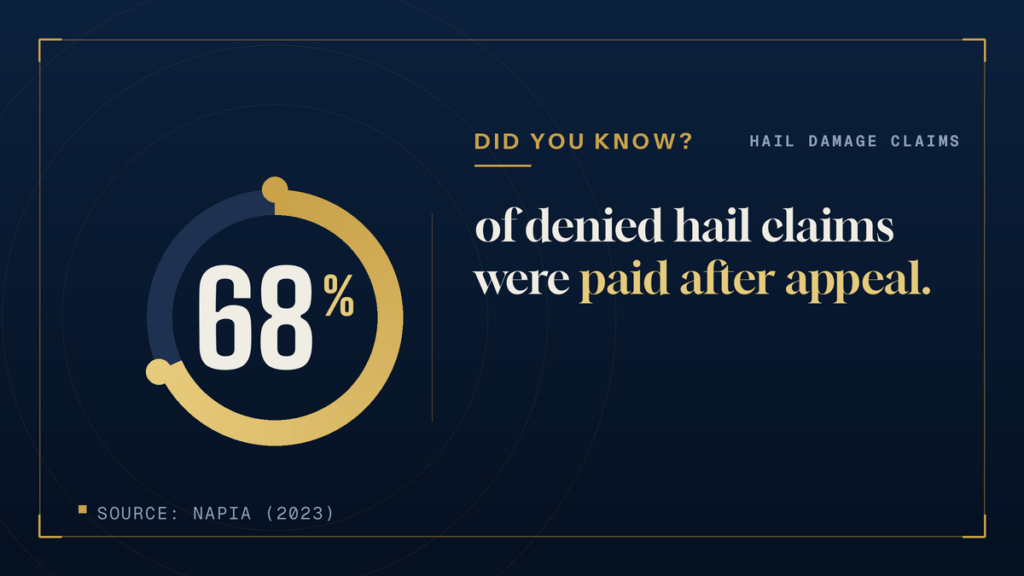
A 2023 study by the National Association of Public Insurance Adjusters found that 68% of initially denied hail-damage claims were paid after homeowners appealed or obtained third-party evaluations.
Summary
A denial is not the end of your hail damage claim. Adjusters often deny these claims by leaning on policy exclusions, calling damage “cosmetic,” or misclassifying it as normal wear and tear—but each of those reasons can be challenged. The key is preparation: photograph and document the damage thoroughly, request a written explanation for the denial, and bring in independent evidence such as a roofing contractor’s report, a meteorological report, or a public adjuster’s assessment.
If your insurer still won’t budge, you have options: a formal appeal, a complaint to your state’s Department of Insurance, mediation or arbitration, or a bad faith lawsuit when the denial lacks any reasonable basis. With strong documentation and persistence, many homeowners succeed in reversing an unfair denial and recovering what their policy owes them.
Frequently Asked Questions
What constitutes bad faith insurance practices?
Bad faith insurance practices include unjustified claim denials, unnecessary processing delays, and misrepresentation of policy terms. These practices undermine trust and violate the obligations insurers owe their policyholders.
What evidence do I need to gather for a bad faith claim?
To support a bad faith claim, gather relevant documents, communication records, witness statements, and any documentation of delays or denials in the claims process. This evidence will strengthen your case and demonstrate the insurer’s lack of good faith.
How can a bad-faith insurance attorney help me?
A bad-faith insurance attorney can improve your chances of a successful outcome by expertly navigating complex legal processes and ensuring proper adherence to legal procedures. This specialized guidance is crucial in effectively addressing your insurance disputes.
What types of damages can I claim in a bad-faith lawsuit?
In a bad-faith lawsuit, you may be able to claim economic, non-economic, and punitive damages. These categories address financial losses, emotional distress, and penalties against the insurer for wrongful conduct.
What is the process of filing a bad-faith lawsuit?
The process typically involves submitting a formal complaint, engaging in discovery, entering into settlement negotiations, and potentially proceeding to trial if a resolution is not reached. Preparing each step diligently strengthens your case.
Call or text (832) 323-3000 or complete a Free Case Evaluation form
Call or text (832) 323-3000 or complete a Free Case Evaluation form