How Long Does an Insurance Claim Take?
How long does an insurance claim take? It can range from a few days to several months, depending on the claim’s complexity and your insurer. This article breaks down typical timelines and what factors can speed up or delay your claim.

For a free legal consultation, call (832) 323-3000
For a free legal consultation, call (832) 323-3000
Key Takeaways
✓ Insurance claims can take from a few days to several months, primarily influenced by the complexity of the claim and the quality of documentation provided.
✓ Effective communication with the insurance adjuster is crucial for expediting the claims process and ensuring timely responses to requests for information.
✓ Understanding state regulations and specific timelines for different types of claims can help policyholders manage expectations and navigate the process more effectively.
Typical Timeframes for Insurance Claims
An insurance claim typically takes anywhere from a few days to several months to process, depending on the specifics of the claim and the insurer involved. For instance, insurers in Texas generally have up to 15 business days to make a decision on a claim after receiving the information they need. Claim investigations can take anywhere from a few days to several weeks, so the timeframe can vary significantly between insurers and depending on the nature of the claim.
Click to contact our property damage lawyers today
Factors Influencing Claim Duration
The processing duration can vary significantly, often spanning from a few days to several weeks, depending on the complexity of the case. Factors such as the complexity of the claim, the quality of documentation, and communication with the insurance adjuster all play crucial roles. Understanding them can help you navigate and expedite the process.
Complexity of the Claim
Claims involving multiple parties or large sums of money typically take longer to evaluate. A claim with contested liability or extensive damage may require thorough investigation and documentation, prolonging resolution. Disputes over the cause or extent of damage can also delay payment while the issues are resolved. In complex cases with significant financial losses, hiring an attorney can help move the process along and protect your right to fair compensation.
Quality and Completeness of Documentation
Timely, complete documentation is vital—missing documents can significantly delay assessment. Thorough records, including proof of insurance, documentation of the loss or damage, photographs, receipts, and repair estimates, allow adjusters to evaluate claims quickly. Submitting everything promptly can greatly expedite the process.
Communication with the Insurance Adjuster
Effective communication with the adjuster can substantially speed up the process. Consistent communication ensures potential problems are addressed in a timely manner, and prompt responses to requests for additional information keep things moving. Keep your adjuster’s contact information handy and maintain open communication throughout.
Complete a Free Case Evaluation form now
Specific Timelines for Different Types of Insurance Claims
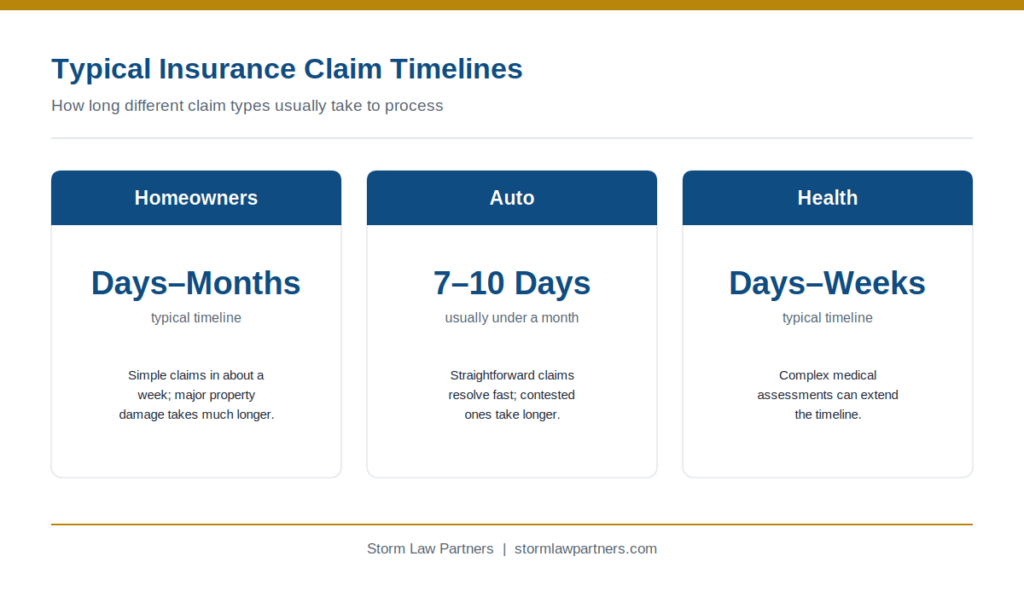
Timelines differ by the type of claim. Here’s a general sense of what to expect.
Homeowners Insurance Claims
Homeowners’ insurance claims can take from several days to months to process, depending on the nature of the damage and the efficiency of the insurer. Simple claims might be resolved within a week, while more complex cases involving significant property damage can take much longer. The type of damage, the amount of documentation required, and the insurer’s responsiveness all significantly influence how quickly your claim is processed, so be prepared for a variable timeline from filing to resolution.
Auto Insurance Claims
Some insurers can process straightforward auto claims in roughly 7–10 business days, and the typical duration is usually less than a month. Factors such as contested liability, a busy repair shop, or injury-related claims can prolong resolution. Clear communication and prompt responses to information requests help expedite the process.
Health Insurance Claims
Health insurance claims typically take anywhere from several days to several weeks, depending on the specifics and the provider’s policies. Complex claims requiring extensive medical assessments can extend the timeline. Clear, complete documentation and periodic follow-ups help ensure timely processing.
How State Regulations Impact Claim Processing
Many states require insurers to acknowledge claims within a window of roughly 10 to 30 days. In Ohio, for example, insurers have 30 days to process a claim if no supporting documentation is required, extendable to 45 days if additional documentation is requested. In Texas, the insurer generally has 15 days to acknowledge a claim and another 15 business days to make a decision after receiving complete documentation, which provides a more predictable timeline.
State laws can greatly influence how willing insurers are to settle, which affects overall duration. If a dispute escalates, litigating against an insurer for delays can take several months to years, depending on complexity, and your state’s statute of limitations for insurance claims sets the outer deadline for filing suit.
Steps to Speed Up Your Insurance Claim
A few proactive habits can keep your claim moving.
Gather All Necessary Documentation Early
Promptly gathering documentation is crucial. Collect proof of insurance, documentation of the loss or damage, photographs, receipts, repair estimates, and, if applicable, any police or incident report. Even if authorities don’t respond to the scene, you can still collect information and take photos to file your claim without an official report. Cooperating with the adjuster and promptly providing documents expedites the process.
Report the Claim Immediately
Promptly reporting your claim initiates the process sooner and can lead to faster resolution—ideally, report within a day of the incident. When you report, include details like the date, time, location, and a description of what happened. Being available to discuss your claim with adjusters and providing thorough information helps move things along.
Follow Up Regularly
Prompt responses to insurer requests reduce delays. Keep your adjuster’s contact information handy and follow up regularly to confirm your claim is progressing and that any issues are addressed quickly. If the insurer is delaying payment unjustly, it may be time to engage a lawyer.
Click to contact our property damage lawyers today
What to Do If Your Claim Is Taking Too Long
If your claim is taking too long, first reach out to your insurer for clarification on its status. If delays persist, hiring a lawyer may be necessary to address potential bad faith actions, and requesting a formal written denial (if your claim is denied) helps keep your documentation organized. If a dispute remains unresolved, you can also file a complaint with your state insurance department.
When to Consider Legal Assistance
If your adjuster isn’t being helpful, or if you suspect your claim has been wrongfully denied or unreasonably delayed, it may be time to seek legal assistance. An attorney can help you understand your legal rights and negotiate effectively with the insurer. The sooner you involve counsel in a contested or high-value claim, the better—and understanding your rights about suing an insurance company for denying a claim is a good starting point.
Attorney Insights: Legal Strategies to Navigate Claim Timelines
As a first-party insurance attorney, I’ve worked with many clients facing delays and confusion in the claims process. Here are five strategies to help you protect your rights and expedite your claim:
- Request a Copy of the Claims File: Insist on your full claim file. It can uncover errors, inconsistencies, or delays that may support a bad-faith complaint.
- Track All Communication: Maintain a detailed log of calls, emails, and letters to hold insurers accountable and show any unreasonable delays.
- Submit a Formal Proof of Loss: This notarized document can expedite processing in many states and satisfy common policy requirements.
- Monitor Compliance with State Deadlines: Many states require insurers to respond or pay within a set number of days. Missing these deadlines can be legally actionable.
- Involve a Public Adjuster or Attorney Early: Especially for complex claims, professional advocacy can prevent bad-faith tactics and significantly shorten the process.
Real-World Example
In 2022, a homeowner in Illinois experienced repeated delays in a burst-pipe claim. The insurer stalled for over 90 days despite complete documentation. After the homeowner hired an attorney and submitted a complaint to the Department of Insurance, the insurer settled the claim for $36,000 and paid additional interest for the delay under state penalty laws.
Case Law Reference
In State Farm Lloyds v. Polasek, 847 S.W.2d 279 (Tex. App. 1992), the court addressed whether an insurer can face bad-faith exposure for delaying processing or payment without a reasonable basis. This decision reflects policyholder protections under the Texas Insurance Code.
Key Statistic
According to the National Association of Insurance Commissioners (NAIC), delayed claim payments are consistently among the most common consumer complaints against insurers nationwide—underscoring how widespread claim delays can be.
Summary
Navigating the insurance claims process can be challenging, but understanding typical timeframes and the factors that influence claim duration can make it more manageable. By gathering necessary documentation early, reporting claims promptly, and maintaining clear communication, you can expedite the process and avoid unnecessary delays.
And if your claim is taking too long, don’t hesitate to seek legal assistance. Being proactive and informed is key to a smooth, efficient claims process.
Frequently Asked Questions
How long does it typically take for an insurance claim to be processed?
The processing time for an insurance claim typically ranges from a few days to several months, depending on the claim details and the insurer. Understanding these variables helps you manage your expectations.
What factors influence the duration of an insurance claim?
The duration is primarily influenced by the complexity of the claim, the thoroughness of the documentation submitted, and the effectiveness of communication with the adjuster. Managing these elements well helps expedite the process.
How can I speed up my insurance claim?
Report it immediately, ensure all documentation is complete, and maintain clear communication with your adjuster. These steps can greatly expedite the process.
What should I do if my insurance claim is taking too long?
Contact your insurer for an update. If the delay continues, consider hiring a lawyer to explore potential bad faith actions by the insurer.
When should I consider legal assistance for my insurance claim?
Consider legal assistance if your adjuster is unresponsive or if you suspect your claim has been wrongfully denied. Engaging a lawyer can help protect your rights and ensure a fair process.
Call or text (832) 323-3000 or complete a Free Case Evaluation form