How Often Will Insurance Pay for a New Roof?
How often will insurance pay for a new roof? It depends on various factors such as your roof’s age, the type of damage, and your specific insurance policy. This article explains these factors to help you better understand your coverage and set realistic expectations.
For a free legal consultation, call (832) 323-3000
For a free legal consultation, call (832) 323-3000
Key Takeaways
✓ Insurance coverage for roof replacement is influenced by the roof’s age, type of damage, and policy details, with older roofs often receiving less coverage due to depreciation.
✓ Homeowners should understand the differences between Actual Cash Value (ACV) and Replacement Cost Value (RCV) policies, as RCV policies offer better financial protection by covering full replacement costs.
✓ Regular inspections and proper maintenance significantly enhance eligibility for coverage, while neglect, pre-existing damage, or lack of documentation can lead to claim denials.
Factors Influencing Insurance Coverage for Roof Replacement
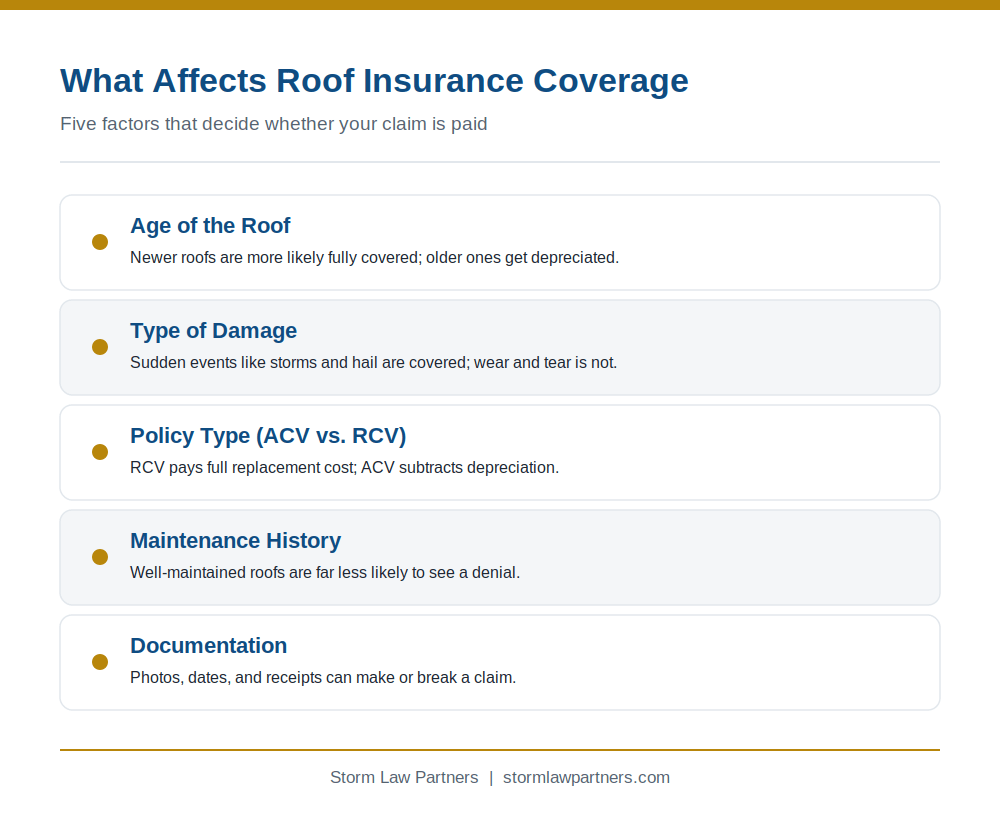
Several critical factors influence whether your insurance will cover a roof replacement, including the age of your roof, the type of damage sustained, and the specific details of your policy. Being aware of these factors can help you navigate the claims process and set realistic expectations.
Age of the Roof
The age of your roof plays a crucial role in coverage. Generally, roofs 10 years old or younger are often fully covered, as they are less likely to have wear-and-tear damage. Older roofs, on the other hand, often receive less in coverage due to depreciation—insurers may only pay the current depreciated value rather than the full replacement cost. For older roofs, denial is more likely when damage is attributed to long-term neglect or aging rather than a sudden incident; a leak claim, for example, may be denied if it results from normal aging.
Type of Damage
The type of damage also impacts coverage. Homeowners insurance generally covers unexpected events like storms, hail, or fallen trees, which are sudden and accidental—so a severe storm that causes significant roof damage is likely covered. However, normal wear and tear, minor issues, or damage caused by neglect are typically not covered. Knowing which types of damage are covered helps you manage maintenance and avoid unexpected costs.
Policy Details
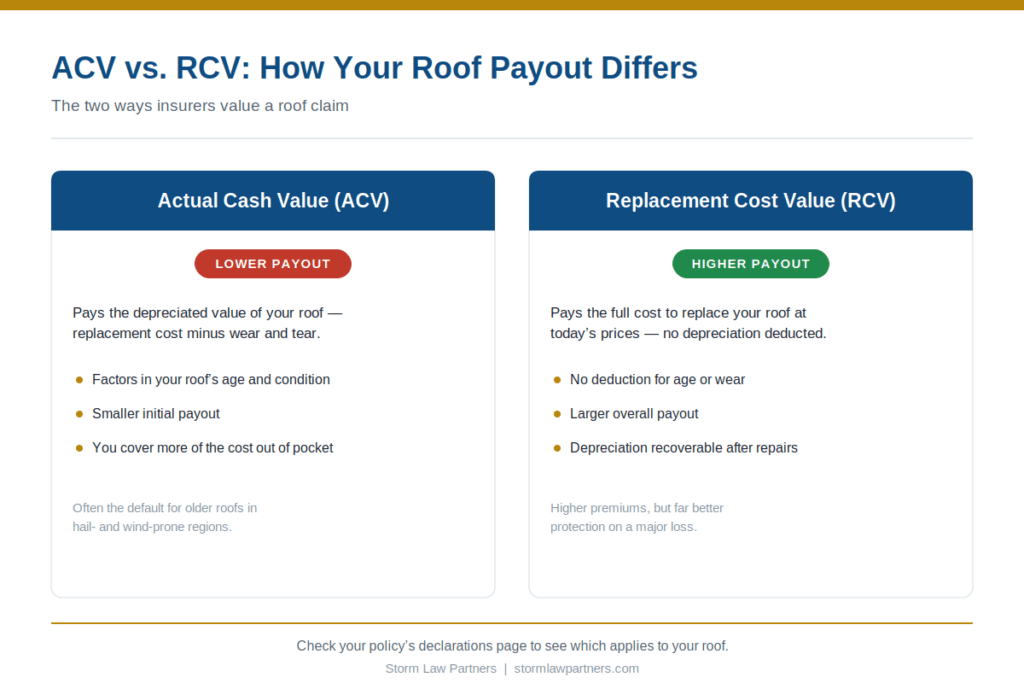
Your policy details are crucial in determining coverage. Two main types exist: Actual Cash Value (ACV) and Replacement Cost Value (RCV). ACV policies calculate payouts based on the roof’s depreciated value, resulting in higher out-of-pocket costs for older roofs, whereas RCV policies cover the full replacement cost without depreciation. Knowing your coverage limits and exclusions can significantly affect your claim outcome.
Click to contact our property damage lawyers today
Understanding Different Insurance Policies
Insurance policies for roof replacement vary significantly, affecting both reimbursement amounts and payout timing. Knowing the difference between ACV and RCV policies is crucial for homeowners, as it influences both the payout amount and the smoothness of the claims process.
 Actual Cash Value (ACV) Policies
An ACV policy determines the payout by assessing the roof’s current value, factoring in wear and tear. For older roofs, this results in payouts based on the roof’s depreciated value, leading to higher out-of-pocket expenses. The main drawback is that ACV doesn’t cover the full replacement cost, which can be challenging if your roof has significantly depreciated—so knowing this helps you prepare financially for any coverage gaps.
Replacement Cost Value (RCV) Policies
RCV policies cover the full cost to replace your roof with a new one, paying out based on the current market price without considering depreciation. This offers significant financial relief, especially for older roofs. RCV policies do come with higher premiums, so homeowners should weigh the benefits of full replacement cost coverage against those higher premiums when deciding.
Complete a Free Case Evaluation form now
The Claims Process for Roof Replacement
Navigating the claims process for a roof replacement can be complex. Typically, it involves documenting the damage, filing the claim, and addressing any discrepancies between contractor estimates and insurance adjuster quotes. Adequate preparation helps ensure a smoother experience.
Documenting Roof Damage
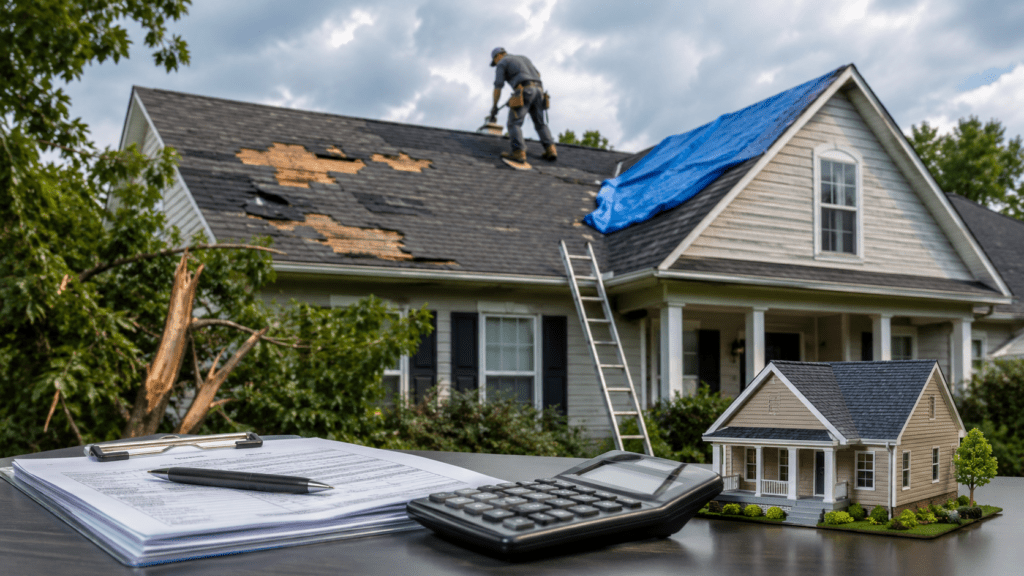
Thorough documentation is crucial for supporting your claim. Take photos and videos of the damaged areas, keep receipts for temporary repairs, and note the date and cause of the damage—capturing both before and after conditions where possible. Proper documentation is especially important for severe weather events like storms, hail, or high winds, since inadequate evidence can result in denials or higher out-of-pocket costs.
Filing the Claim
After documenting the damage, file the claim with your insurance company, provide all necessary documentation, and pay your deductible. Keep copies of all communications and documents related to the claim. If approved, you can proceed with replacing your roof.
Dealing with Discrepancies
Discrepancies between contractor estimates and insurance adjuster quotes are common. If your insurance estimate is lower than expected, gather multiple contractor quotes and present clear evidence of the damage to negotiate a fair payout. If your claim is rejected or falls short, you can consider supplementing the claim, paying out of pocket, or financing the replacement.
Click to contact our property damage lawyers today
How Often Does Insurance Pay for a New Roof?
How often insurers pay for new roofs is influenced by factors like regular inspections and severe weather events. Knowing these factors helps homeowners manage expectations and ensure adequate coverage for roof damage.
Regular Inspections and Maintenance
Regular roof inspections can significantly enhance eligibility for coverage. Identifying and addressing issues early can prevent denials due to neglect, while inspections help document the roof’s condition and prove damage was caused by a recent event. Neglect and lack of maintenance are common reasons for denials, since insurers may view the damage as long-term wear rather than a sudden incident.
Impact of Severe Weather Events
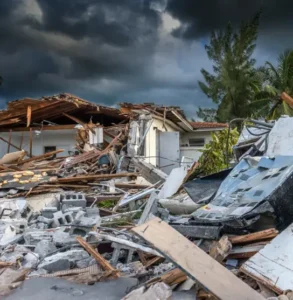
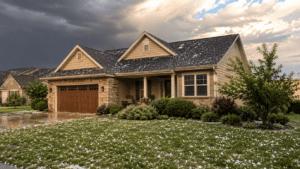
Severe weather, like storms and hail, significantly increases the likelihood of roof damage and claims, including potential water damage. Homeowners insurance generally covers these losses, though coverage may vary, and thorough documentation through photos and videos is crucial for supporting claims. For a sense of what storm-related roof claims pay out, see our guide on the average insurance payout for a hail-damaged roof.
Common Reasons for Claim Denial
Knowing the common reasons for denial helps homeowners take proactive steps to avoid them. Claims are often denied due to neglect, poor maintenance, or pre-existing damage.
Neglect and Poor Maintenance
Neglecting regular roof maintenance can significantly affect your claims. Failure to maintain the roof can lead to long-term issues like slow leaks or mold growth, which insurers often cite when denying claims. Wear-and-tear damage from long-term neglect is typically not covered, which can mean higher out-of-pocket costs, so regular inspections and timely repairs help you avoid these pitfalls.
Pre-existing Damage
Pre-existing damage refers to any roof damage that existed before the current policy was taken out or before a specific loss event. Policies generally do not cover pre-existing damage, so you must prove the damage was caused by a recent covered event to receive compensation. Keeping thorough records of any repairs or inspections done before taking out a new policy helps you avoid disputes and improve your chances of a successful claim.
Expert Legal Considerations for Roof Insurance Claims
As a seasoned first-party insurance attorney, I find that one of the most overlooked yet impactful factors is how policy language affects claim interpretation. Pay close attention to clauses like “concurrent causation,” which can complicate coverage when multiple causes (for example, wear and storm damage) are involved. Many policies also contain anti-concurrent causation clauses that explicitly exclude coverage if an uncovered event contributed to the loss, even in a minimal way. A single misinterpretation can mean the difference between full coverage and complete denial, which is why consulting a legal expert during the claims process can be so valuable.
Other Factors That Can Affect Your Roof Claim
- Policy Endorsements: Be aware of endorsements or riders that may add or remove roof coverage—these often change what’s covered after storms or due to age-based exclusions.
- Supplemental Claims: If your insurer underpays, you may be able to file a supplemental claim with additional documentation and estimates, an option many homeowners don’t realize they have.
- Statute of Limitations: Each state has different timelines for filing a lawsuit if your claim is denied. In Texas, for example, you generally have two years to dispute a denial in court, see our overview of the statute of limitations for insurance claims.
- Roof Matching Laws: Some states require insurers to replace your entire roof if matching materials are unavailable, which can significantly increase a claim’s value and scope.
Real-World Example: Hurricane Ian
In the aftermath of Hurricane Ian in 2022, thousands of homeowners in Florida filed roof replacement claims. Many were surprised to find insurers using depreciation formulas and anti-concurrent causation clauses to limit payouts. Homeowners who had detailed inspections and legal guidance generally fared better in receiving full roof replacements under their RCV policies.
Case Law Spotlight: Johnson v. Nationwide Mutual Insurance Co.
In Johnson v. Nationwide Mutual Insurance Co., 828 So. 2d 1021 (Fla. 2002), the Florida Supreme Court held that ambiguous policy language must be construed in favor of the insured. This case reinforces the importance of understanding and challenging vague policy terms, especially in roof damage claims where ambiguity about cause and coverage is common.
Interesting Statistic
According to the Insurance Information Institute, wind and hail damage have accounted for a large share of homeowners’ insurance claims in the U.S. in recent years. This is a key reason insurers scrutinize roof-related claims closely—and why homeowners must be vigilant about documenting and understanding their policies.
Summary
Navigating insurance coverage for roof replacement requires a solid understanding of several key factors. The age of your roof, the type of damage it sustains, and the specifics of your policy all play crucial roles in determining coverage. Regular maintenance and thorough documentation are essential for maximizing your benefits and minimizing out-of-pocket costs.
By staying informed and proactive—and understanding the difference between ACV and RCV coverage —you can keep your roof protected and be well prepared to handle any unexpected events that come your way.
Frequently Asked Questions
How does the age of my roof affect insurance coverage?
The age of your roof greatly influences your coverage. Newer roofs generally receive fuller coverage, whereas older roofs are often depreciated and offer less protection. Maintaining or replacing an aging roof helps ensure adequate coverage.
What types of damage are typically covered by homeowners’ insurance?
Homeowners insurance generally covers damage from unexpected events like storms, hail, and fallen trees, but it does not cover normal wear and tear or neglect. Review your policy for the specifics of your protection.
What is the difference between Actual Cash Value (ACV) and Replacement Cost Value (RCV) policies?
The key difference lies in how payouts are calculated. ACV accounts for depreciation, leading to higher out-of-pocket costs, while RCV covers the full replacement cost without depreciation deductions—so RCV helps ensure you receive enough to fully replace your roof.
How can I ensure my insurance claim for roof replacement is successful?
Document the damage with photos and videos, submit your claim promptly, and include all necessary documentation. Regular maintenance and inspections also help strengthen your claim against potential denials.
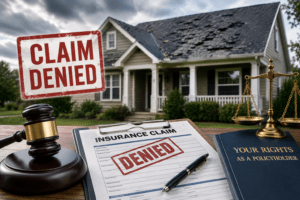
Why was my insurance claim for roof replacement denied?
Common reasons include neglect, pre-existing damage, or normal wear and tear. To prevent future issues, prioritize regular maintenance and keep thorough documentation of any repairs.
Call or text (832) 323-3000 or complete a Free Case Evaluation form