How to Get Insurance to Pay for Water Damage
Dealing with water damage can be overwhelming, but knowing how to get your insurance to cover it makes the process easier. First, shut off the water and document all damage. Understand your policy, report the incident promptly, and follow these steps to give your claim the best chance of success.
For a free legal consultation, call (832) 323-3000
Key Takeaways
✓ Identify and stop the source of water damage promptly to prevent further issues and keep your insurance claim valid.
✓ Understand your insurance coverage, including common exclusions, to set realistic expectations for the claims process.
✓ Document all damage thoroughly and maintain open communication with your insurance provider to facilitate a smooth claims process.
Click to contact our property damage lawyers today
Identify and Stop the Source of Water Damage
When dealing with water damage, the top priority is to identify and stop the source. It might seem obvious, but it’s easy to overlook in the chaos of water intrusion. Common sources include faulty appliances and burst or frozen pipes, including washing machines. Immediate action is essential, as prolonged water flow increases the extent and cost of the damage.
Upon discovering water damage, turn off the water supply immediately. For a burst pipe, this usually means shutting off the supply to the affected area or the main water supply to your home—a simple step that can save you from significant additional damage and expense. If you’re unsure how to proceed, contact a licensed plumber. Knowing the source also matters for your claim, since your provider needs to determine the cause to see if it’s covered under your policy.
Complete a Free Case Evaluation form now
Determine Your Insurance Coverage
After controlling the immediate crisis, determine what your home insurance policy covers. Most standard homeowners’ policies cover sudden and accidental damage, such as a burst pipe or an overflowing washing machine. Our guide on whether home insurance covers water damage breaks this down in detail.
Be aware of common exclusions, though. Damage from poor maintenance and gradual leaks is usually excluded, and flooding from external sources, such as heavy rain or river overflow, typically requires a separate flood insurance policy. You may also want additional coverage for sewer backups or other water-related damage not included in standard policies. Knowing your coverage helps set realistic expectations and prepares you for the claims process—and if certain damage isn’t covered, you can explore other options for more comprehensive protection.
Report the Claim to Your Insurance Provider
Report water damage to your insurance provider promptly, ideally within 24–48 hours of discovery. Quick reporting helps your claim get processed swiftly and reduces the risk of complications or delays. When you report, provide detailed information—the extent of the water intrusion, its source, and any mitigation steps you’ve taken. Your insurance agent will guide you through the process, and if they’re unavailable, follow up during business hours to keep communication open and accurate.
Document the Damage
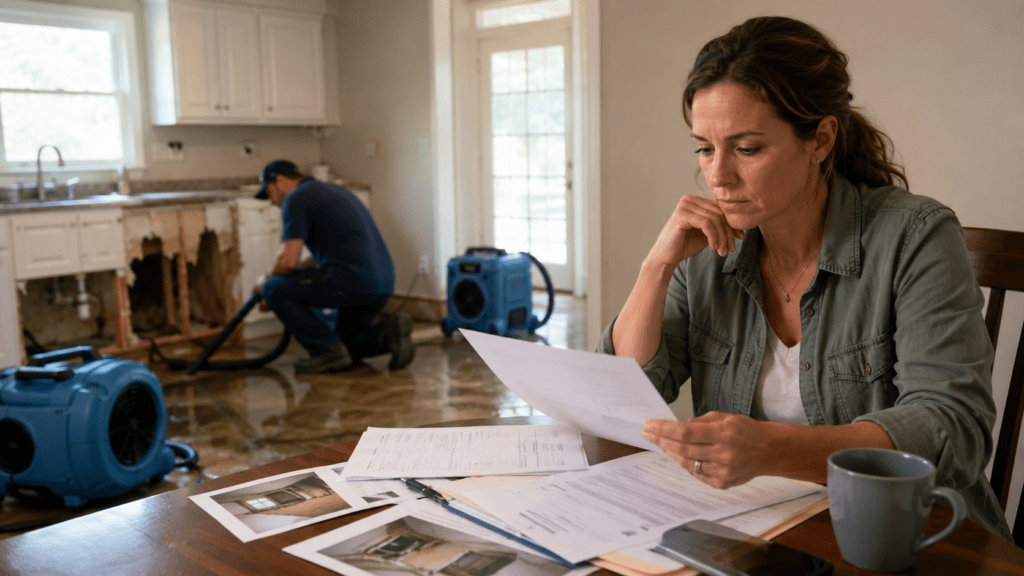
Thoroughly documenting the water damage is critical. Before starting cleanup, take clear photos and videos of the affected areas—this visual evidence is essential for supporting your claim. Document all affected areas, including damaged walls, floors, furniture, appliances, and water-logged items, and complete this before filing your claim, since it serves as your primary evidence.
In addition to photos and videos, keep receipts for any emergency repairs or mitigation efforts. This includes costs for boarding up openings, hiring professionals for water extraction, and temporary fixes. These records bolster your claim and help ensure you’re compensated for related expenses.
Prevent Further Damage
After documenting the damage, act immediately to prevent further issues—insurance policies often require you to show efforts to mitigate additional damage. Ensure safety first, stop the water from spreading, remove valuables from the affected area, and promptly address moisture to prevent worsening damage. Boarding up openings can help prevent additional water entry during heavy rain or ongoing flooding. Neglecting these steps may be considered negligence and could affect your claim.
Click to contact our property damage lawyers today
Professional Cleanup and Repairs
Hiring professionals for cleanup and repairs is often the best course of action. Water damage restoration companies specialize in water extraction, drying, and mold remediation, and their expertise and equipment are crucial for managing damage and preventing further issues. When selecting a restoration company, ensure they provide estimates and have the necessary licenses and insurance, and meet with several contractors to compare qualifications and proposals. Keep detailed records of all repairs and receipts to strengthen your claim. Prompt, professional drying also reduces the risk of mold infestations, which can create health risks and additional costs.
Meet with the Insurance Adjuster
Meeting with the insurance adjuster is a crucial step. The adjuster evaluates the damage, takes photos and measurements, and asks how and when the damage occurred, with the goal of estimating repair costs and determining any fault. Be prepared to answer questions about the cause and timeline, since this helps the adjuster assess the situation accurately.
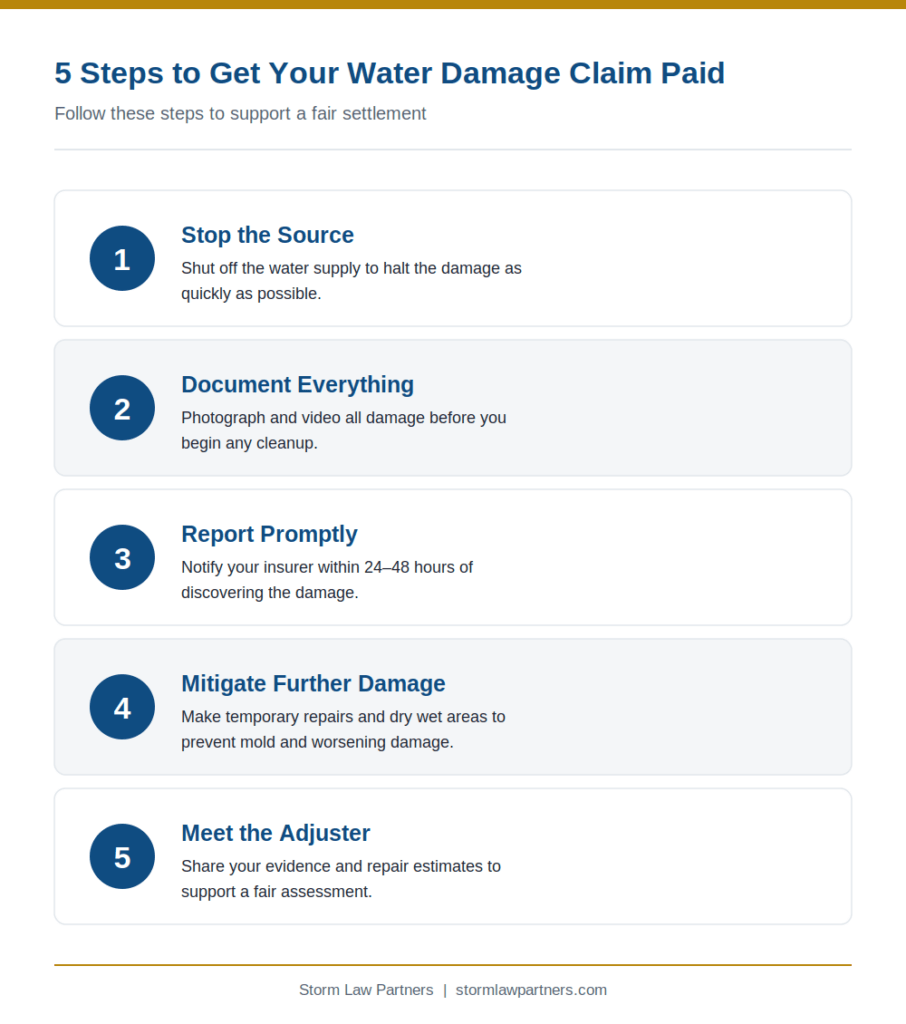
Detailed communication and documentation matter, as adjusters process claims quickly and may overlook important details. Five steps to get your water damage claim paid: stop the source, document everything, report promptly, mitigate further damage, and meet the adjuster. Providing additional evidence, such as photos and repair estimates, can aid negotiations and support a fair settlement. If hidden water damage isn’t immediately visible, describe it in detail; tools like thermal imaging can help assess the full extent. Keep a record of all communications with the adjuster, especially if multiple adjusters are involved.
Understand Your Settlement Options
Understanding your settlement options is crucial for making informed decisions. There are two primary types of coverage: actual cash value (ACV) and replacement cost coverage. ACV pays the property’s depreciated value at the time of loss—calculated by subtracting depreciation from the replacement cost, resulting in a lower payout. Replacement cost coverage reimburses you for the current cost to replace damaged items, resulting in higher compensation and helping you fully restore your property to its pre-damage condition.
 Negotiate the Settlement
Negotiating the settlement requires detailed evidence and a strong case. Gather evidence of repair costs, including receipts and estimates, to present to your insurer—this justifies the amount claimed and strengthens your position. If the initial offer is inadequate, consider legal representation or an independent assessment to help negotiate larger repair claims. If a third party caused the damage, a lawyer can help you pursue compensation from them.
Indicators of bad faith from insurers, such as unreasonable delays or misrepresentation, may warrant legal intervention. If your rights are being infringed or you aren’t receiving fair treatment, consulting a lawyer can be crucial—especially for complex claims or when the insurer denies or underpays. Understanding your rights about suing an insurance company for denying a claim is a good place to start. Weigh the potential benefits against the costs, but in many cases, legal advice is key to securing the compensation you deserve.
Attorney Insights: Legal Strategies for Getting Insurance to Pay for Water Damage
As a first-party property insurance attorney, these proven steps can significantly improve the outcome of your water damage claim:
- Submit a Formal Proof of Loss: This signed and sworn statement is often required and signals you’re serious. It outlines what you’re claiming and supports faster processing.
- Track All Communications: Keep a detailed log of all calls, emails, and letters. Insurer delay or miscommunication may constitute bad faith and support legal remedies.
- Request a Copy of the Claims File: You’re entitled to this documentation. Reviewing it can reveal missed evidence or unfair assessments that can be contested.
- Understand Policy Limits and Sublimits: Many policies cap coverage for water damage, mold, or plumbing. Know your limits—and make sure your insurer doesn’t misapply them.
- Use an Independent Contractor or Engineer: Their evaluation can challenge a low or denied estimate, especially for hidden structural or mold damage.
Real-World Example
In 2023, a Texas homeowner experienced slab leak damage, with the insurer’s initial offer capped at $5,000 due to a supposed plumbing sublimit. After hiring an attorney and establishing that the damage stemmed from a covered peril—a burst pipe under the foundation—the claim was renegotiated and settled for $27,500. Legal intervention helped expose an improper interpretation of the sublimit clause.
Case Law Reference
In Amica Mutual Insurance Co. v. Moak, 55 So. 3d 549 (La. Ct. App. 2011), the court addressed how an insurer may face bad faith exposure for ignoring credible contractor reports and evidence. This underscores the importance of independent assessments and proper claims handling.
Key Statistic
According to the Insurance Information Institute, a large share of homeowners’ insurance claims involve water damage, with the average water damage claim commonly reported at over $12,000—yet many are initially denied or underpaid without proper documentation or legal support.
Summary
Navigating a water damage insurance claim can be daunting, but with the right steps, you can give yourself the best shot at a smooth, successful outcome. From identifying and stopping the source of water to understanding your coverage and documenting the damage, every action counts toward a favorable settlement.
Act quickly, communicate effectively with your insurance provider, and consider professional help for cleanup and repairs. By following this guide, you’ll be better prepared to handle a water damage incident and pursue the compensation you deserve—protecting both your home and your peace of mind.
Frequently Asked Questions
What should I do first when I discover water damage in my home?
First, identify and shut off the water to prevent further damage. This may mean shutting off the water supply to the affected area or to your entire home.
Does homeowners’ insurance cover all types of water damage?
Generally, it covers sudden and accidental water damage, such as from a burst pipe, but excludes gradual damage, poor maintenance, and flooding, which require separate policies.
How quickly should I report water damage to my insurance provider?
Report it within 24–48 hours to ensure a timely response and prevent complications. Acting promptly facilitates a smoother claims experience.
Why is documenting the damage with photos and videos important?
Photos and videos serve as vital evidence for your claim, clearly showing the extent of the damage and strengthening your case for fair compensation.
When should I consider seeking legal advice for a water damage claim?
Seek legal advice if your claim is denied or underpaid, or if you encounter complexities or potential bad faith from your insurer. This can help secure fair treatment and appropriate compensation.
Call or text (832) 323-3000 or complete a Free Case Evaluation form