How to Sue an Insurance Company for Bad Faith
Dealing with an insurance company that refuses to pay your valid claim can be frustrating. To help you understand how to sue an insurance company for bad faith, this article covers the steps to identify bad faith practices, gather necessary evidence, and take legal action, including consulting a lawyer and filing a lawsuit.

For a free legal consultation, call (832) 323-3000
For a free legal consultation, call (832) 323-3000
Key Takeaways
✓ Bad faith insurance occurs when insurers fail to honor valid claims or act unreasonably, giving policyholders the right to sue for compensation.
✓ Policyholders should recognize bad faith practices, such as unjustified denials and delays, and gather comprehensive evidence to support their claims.
✓ Engaging an experienced bad faith insurance attorney can significantly improve the chances of success in legal proceedings and negotiations against the insurer.
Understanding Bad Faith Insurance
Bad faith insurance occurs when an insurance company refuses to honor valid claims or fails to pay fair amounts owed to policyholders. Every insurance contract carries an implied covenant of good faith and fair dealing, which means the insurer is obligated to act reasonably toward the policyholder when processing and settling claims. When an insurance company fails to meet this obligation, it can be held accountable for bad faith conduct.
The concept of good faith is foundational in insurance law—it ensures that insurers act fairly and reasonably toward their clients. Unfortunately, not all insurers honor this standard, and some engage in practices that jeopardize policyholders’ financial security. For example, some states, such as Missouri, classify bad-faith claims into categories such as failure to defend, bad-faith failure to settle, and vexatious refusal to pay. Importantly, policyholders generally have the right to sue for bad faith in addition to breach of contract, which means you can seek legal recourse to recover the compensation you deserve.
Click to contact our property damage lawyers today
Recognizing Bad Faith Practices by Insurers
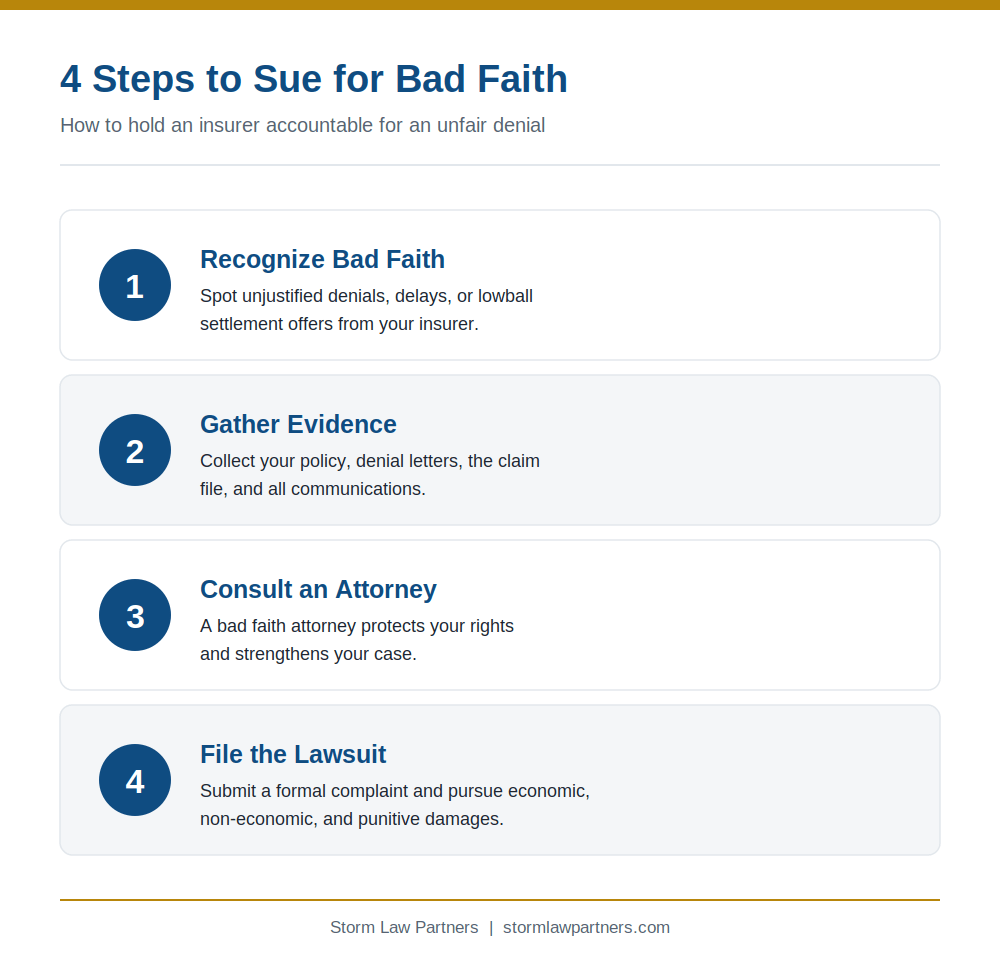
Identifying bad faith actions is crucial for policyholders. Bad faith involves insurers evading their responsibilities, such as denying legitimate claims or causing unreasonable delays. Common practices include denial without reasonable justification, inadequate investigation, and low settlement offers.
Insurers may also misrepresent policy terms or fail to disclose important exclusions before a policy is purchased, engaging in deceptive conduct that can mislead policyholders about their coverage. Negligence in responding to claims further exemplifies bad faith, as does an adjuster’s misrepresentation of the law or the facts of the case. Corporate policies that encourage unfair treatment of claimants can also support allegations that an insurer acted in bad faith. Early recognition of these patterns helps you gather evidence and seek legal advice effectively.
Complete a Free Case Evaluation form now
Gathering Evidence for Your Bad Faith Claim
A bad-faith lawsuit begins with gathering all relevant documents and communication records—your insurance policy, any coverage denials, and all written communication with the insurer. Keeping track of emails, letters, and notes from phone calls is critical to supporting your claim.
Witness statements can provide additional perspectives, and the insurer’s claim file is another valuable source of evidence, as internal correspondence and investigative details can reveal the insurer’s intentions. Evidence of processing delays or inadequate investigation can be particularly telling—delays in payment after a claim approval, or a failure to investigate promptly, may indicate an attempt to avoid timely compensation. Document every interaction, including dates, times, and representatives’ names, to build a strong case.
Consulting a Bad Faith Insurance Attorney
Engaging a qualified attorney experienced in bad faith claims helps protect your rights and significantly increases the likelihood of a successful outcome. Legal representation helps navigate complex procedures and negotiations and ensures proper adherence to legal processes. Insurers tend to resolve claims more promptly and justly when the policyholder has legal representation.
An experienced lawyer helps you understand your rights and develop effective strategies for your case. With an attorney by your side, you are better prepared to challenge the insurance company’s actions, seek the compensation you deserve, and understand your broader rights to sue an insurance company for denying a claim.
Click to contact our property damage lawyers today
Filing a Bad Faith Lawsuit
Filing a formal complaint against the insurance company initiates the process. The complaint outlines the bad-faith allegations and the damages sought, which may include economic damages, such as direct financial losses like property damage or other out-of-pocket costs. Be mindful of filing deadlines tied to your state’s statute of limitations for insurance claims. Legal proceedings then follow phases such as discovery, motion practice, and possibly a trial, during which an experienced attorney ensures your case is effectively presented.
Proving Bad Faith in Court
Recording delays or unreasonable denials in claim processing is crucial for proving bad faith, since courts need substantial proof that the insurer failed to act in good faith and fair dealing. Expert testimony can bolster your case by providing authoritative insights, though it isn’t always necessary. Courts may permit bad faith claims to be proven based on common knowledge and the jury’s reasonable understanding. Ultimately, the policyholder must demonstrate that the insurer’s actions were unreasonable and unjustified, a standard that thorough evidence and credible testimony can meet.
Potential Outcomes and Damages
Claimants in a bad-faith lawsuit can generally seek three main types of damages:
- Economic damages cover quantifiable expenses directly related to the insurer’s bad faith actions, such as property damage and other out-of-pocket losses.
- Non-economic damages address intangible losses, including emotional distress or pain and suffering caused by the insurer’s misconduct.
- Punitive damages are awarded when the insurer’s conduct is shown to be malicious or oppressive, penalizing wrongdoing and deterring future misconduct.
Legal Proceedings and Settlement Negotiations
The initial phase of a bad-faith lawsuit involves evaluating the case and filing a formal complaint. After filing, the insurance company usually has 20–30 days to respond, which shapes its defense strategy. During discovery, both parties exchange evidence to determine the strengths and weaknesses of their cases, a phase that can last several months to over a year. Motion practice occurs throughout, allowing both sides to argue various legal issues.
Settlement negotiations and mediation can occur at any time, potentially resolving the case before trial. Trial preparation varies, and trials can last from days to weeks. If either side appeals, the appeals process can further extend the timeline by reviewing the court’s decisions for legal correctness.
Advanced Legal Strategies from a First-Party Bad Faith Attorney
As a first-party insurance attorney specializing in bad faith claims, here are key insights I advise all clients to follow when preparing to sue an insurance company:
- Send a Pre-Lawsuit Demand Letter: Formally demand payment and cite the bad faith conduct. This creates a legal record and may satisfy notice requirements in your state.
- Request the Claims File: You are legally entitled to your insurer’s claims file. It may contain internal notes and evidence that reveal bias, errors, or a lack of investigation.
- Preserve All Communication: Document every phone call, email, and letter. Inconsistencies or unresponsiveness can later support a bad-faith claim.
- Calculate Damages Beyond the Claim: Include emotional distress, consequential losses (like lost income), and potentially punitive damages in your case strategy.
- Watch for Pattern and Practice: If your insurer has a history of similar denials, it could bolster your case by showing a systemic issue of misconduct.
Real-World Example
In 2023, a business owner sued their insurer for denying a fire damage claim. The insurer cited “insufficient documentation,” despite complete submissions. After a lawsuit was filed and the internal claim file revealed that the adjuster had never reviewed the damage photos, the jury awarded $1.2 million—including punitive damages for bad-faith conduct.
Key Case Law
In Gruenberg v. Aetna Insurance Co., 9 Cal. 3d 566 (1973), the California Supreme Court confirmed that insurers owe a duty of good faith and fair dealing to their policyholders, and that a breach of that duty can give rise to a separate tort claim. This landmark case is widely cited in establishing the right to sue for bad faith independently of breach of contract.
Relevant Statistic
Legal industry research has found that policyholders who pursue bad-faith claims, particularly when punitive damages are involved, can recover substantially more than the original value of their claim, underscoring the potential impact of holding insurers accountable.
Summary
Navigating a bad faith insurance lawsuit can be complex and daunting, but understanding your rights and the legal process can empower you to take action. From recognizing bad-faith practices to gathering evidence and consulting an attorney, each step is crucial to building a strong case.
By holding insurers accountable for their actions, policyholders can seek the compensation they deserve and help deter future misconduct. You have the right to fair treatment—and the legal means to fight back against bad faith insurance practices.
Frequently Asked Questions
What constitutes bad faith insurance practices?
Bad faith insurance practices include unjustified claim denials, unnecessary processing delays, and misrepresentation of policy terms. These practices undermine trust and violate the obligations insurers owe their policyholders.
What evidence do I need to gather for a bad faith claim?
Gather relevant documents, communication records, witness statements, and any documentation of delays or denials in the claims process. This evidence strengthens your case and demonstrates the insurer’s lack of good faith.
How can a bad-faith insurance attorney help me?
A bad-faith insurance attorney can improve your chances of a successful outcome by expertly navigating complex legal processes and ensuring proper adherence to legal procedures. This specialized guidance is crucial in effectively addressing your insurance disputes.
What types of damages can I claim in a bad-faith lawsuit?
You may be able to claim economic, non-economic, and punitive damages. These categories address financial losses, emotional distress, and penalties against the insurer for wrongful conduct.
What is the process of filing a bad-faith lawsuit?
The process involves submitting a formal complaint, engaging in discovery, entering into settlement negotiations, and potentially proceeding to trial if a resolution is not reached. Preparing each step diligently strengthens your case.
Call or text (832) 323-3000 or complete a Free Case Evaluation form