How a Property Damage Insurance Claim Lawyer Can Maximize Your Settlement
Dealing with property damage and struggling with your insurance claim? A property damage insurance claim lawyer can help. They guide you through the process, negotiate with insurers, and fight for a fair settlement. This article explains how these lawyers can help you maximize your settlement and provide support.

For a free legal consultation, call (832) 323-3000
For a free legal consultation, call (832) 323-3000
Key Takeaways
✓ Property damage claims help recover financial losses from incidents like natural disasters, accidents, or vandalism, and require thorough documentation and multiple repair estimates for effective negotiation.
✓ Hiring a property damage insurance claim lawyer can optimize settlement amounts through expert negotiation, legal interpretation of policies, and proper documentation—making legal representation crucial for complex claims.
✓ Immediate actions following property damage, such as documenting the damage and mitigating further incidents, significantly influence the success of a claim and the likelihood of receiving fair compensation.
Understanding Property Damage Claims
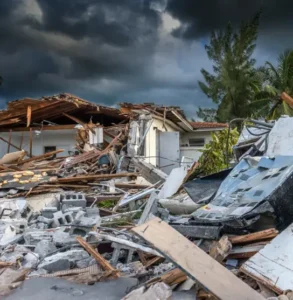
Property damage refers to harm or destruction to real or personal property, impacting the structure or contents of a home. These claims help recover financial losses from events such as natural disasters, accidents, or vandalism, common scenarios that often lead to them. Documenting the damage thoroughly supports your claim with the necessary evidence, and obtaining multiple repair estimates can validate the claimed amount and assist in negotiations.
Types of Property Damage
Insurance policies typically cover various types of property damage, including fire, storm, and vandalism. Fire damage can result from wildfires, electrical faults, or arson; storm damage includes destruction from wind and rain caused by hurricanes, tornadoes, and severe storms, usually covered by homeowners’ policies. Other common causes include water damage from burst pipes and heavy rainfall. Vandalism, intentional damage such as graffiti or broken windows, is generally covered by most policies as well.
Common Reasons for Filing a Claim
Natural disasters, accidents, and theft frequently lead to property damage claims. Wind damage from hurricanes, tornadoes, and strong thunderstorms is a significant reason for filing, as is human error—such as accidental damage by a contractor or neighbor. Recognizing these reasons allows property owners to prepare for potential claims and file legitimately.
Click to contact our property damage lawyers today
Complete a Free Case Evaluation form now
The Role of a Property Damage Insurance Claim Lawyer
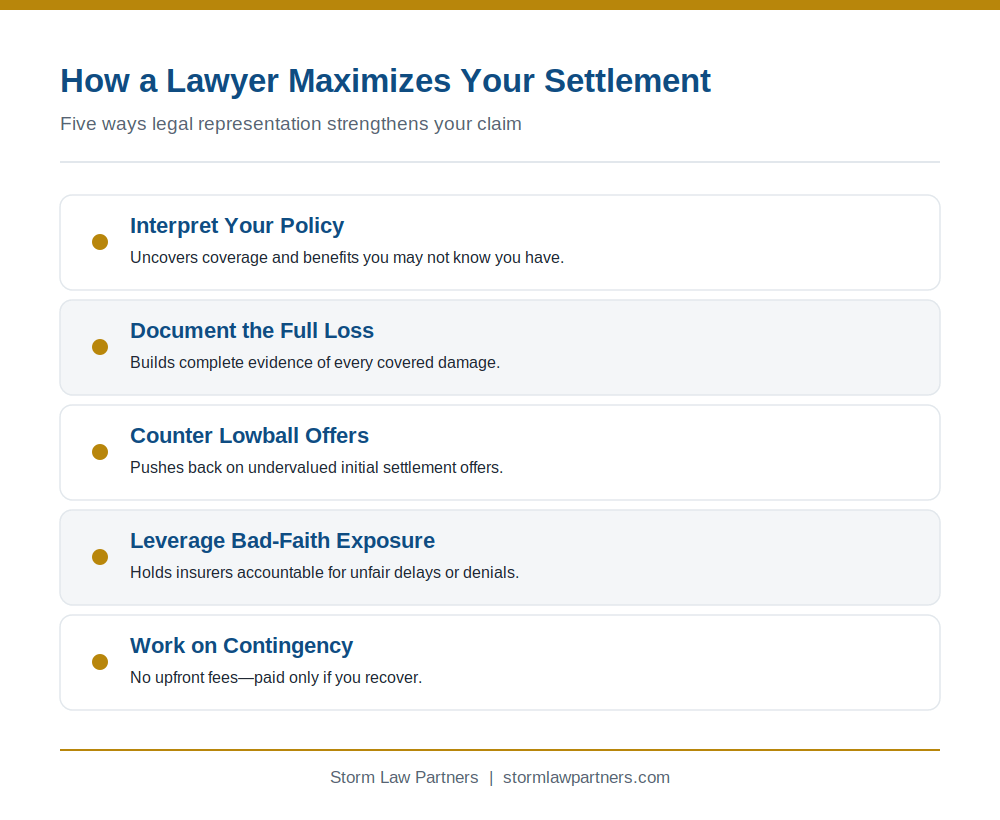
A property damage insurance claim lawyer offers legal advice and protects clients’ rights throughout the claims process. They interpret complex policies, negotiate fair settlements, and document evidence for support. During the evaluation of a claim, lawyers assess the strength of the case and the potential compensation for damages, and by managing interactions and negotiations with insurers, they reduce clients’ burdens and help optimize settlements.
Evaluating Your Insurance Policy
Lawyers interpret complex policies and help clients understand their rights, often identifying coverage options that clients may not be aware of. High-value claims frequently involve intricate legal regulations that benefit from a lawyer’s expertise, and attorneys can efficiently navigate complex claims involving specialized coverage or multiple damage types.
Documenting and Presenting Evidence
Insurance companies might delay or deny claims to protect their bottom line, so collecting and organizing evidence is crucial. A lawyer might advise you to take photographs, gather repair estimates, and keep detailed records of all communications with the insurer—meticulous documentation that can make a significant difference in the outcome of your claim.
Negotiating with Insurance Companies
Insurance companies often employ tactics to minimize payouts, making negotiation skills vital. Attorneys leverage evidential support and negotiation experience to counter low settlement offers, handling communication and negotiation to protect your legal rights and work toward fair compensation.
When to Hire a Property Damage Lawyer
Hire a property damage lawyer when facing significant damage or complications with your insurer. A lawyer can review your policy, identify available options, and fight for a fair settlement—and help ensure compliance with legal deadlines so you don’t lose the right to sue. Knowing your state’s statute of limitations for insurance claims is part of that.
Denied or Underpaid Claims
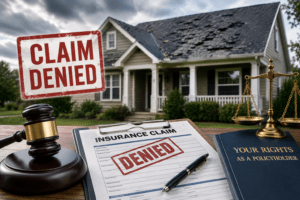
Homeowners commonly face coverage refusals, reduced payouts, and delays. If you feel mistreated by your insurer, it’s advisable to contact a skilled property insurance claims lawyer. You can file a complaint with the relevant department or hire an attorney, and providing additional evidence or repair estimates can strengthen a claim that was rejected. Understanding your rights about suing an insurance company for denying a claim helps you decide how to proceed.
Complex or High-Value Claims
Lawyers navigate the complexities of high-value claims, ensuring clients understand their rights and options. They document evidence, negotiate with insurers, and file necessary legal actions when needed. Complex or high-value claims often involve multiple parties and intricate regulations, making professional legal assistance indispensable for maximizing compensation.
Bad Faith Practices
Insurance companies have a legal obligation to act in good faith and settle valid claims promptly. A bad faith claim arises when an insurer acts unreasonably—denying, undervaluing, or delaying a valid claim—and policyholders can sue when this happens. The Texas Insurance Code specifically addresses unfair settlement practices, and policyholders can seek significant damages in bad faith lawsuits. If you suspect bad faith, consulting a lawyer can help you understand your options.
Steps to Take After Discovering Property Damage
After discovering damage, review your policy to determine coverage, then take immediate action to recover compensation and mitigate further damage. Thoroughly document the damage with photographs and notes, and create a written inventory noting what happened and when. Acting swiftly and documenting meticulously lays a solid foundation for a successful claim.
Mitigating Further Damage
Actions like turning off electricity, shutting off the main water supply, or covering openings prevent additional damage. Safeguarding the property through prompt action protects your interests during the claims process and shows the insurer you are responsibly protecting your propertywhich strengthens your position.
Documenting the Damage
Comprehensive documentation is vital for substantiating a property damage claim. Photographs, video recordings, and a detailed inventory of damaged property all help build a strong case and increase the chances of a favorable outcome.
Contacting Your Insurance Company
Contact your insurer as soon as possible, and save receipts from any temporary repairs. Providing a clear, detailed account of the damage and the mitigation steps you took—along with a timeline of events—streamlines the claims process and demonstrates your proactive approach.
Click to contact our property damage lawyers today
How a Lawyer Can Help During the Claims Process
Legal representation alleviates the stress of managing a claim, letting you focus on recovery. A lawyer can challenge delays or denials, expedite the handling of a delayed claim, and navigate the complexities that arise when multiple parties are involved. During the first meeting, a lawyer will assess your case details and guide you on the next steps—and you can often request a free case review to understand your options.
Filing the Claim
Gather evidence, including photographs of the damage and repair estimates, before dealing with an adjuster. Repair estimates value the damage and support your claim, and proper preparation helps avoid delays or denials. A lawyer ensures all documentation is in order and the necessary steps are followed, preventing common pitfalls.
Dealing with Adjusters
Lawyers understand adjusters’ strategies and can counteract low offers during negotiations. They handle communication and negotiation to protect your legal rights, and combined with strong documentation—photos, repair estimates, and relevant records—this helps ensure a fair assessment. A lawyer’s experience with adjusters can significantly impact the settlement you receive.
Pursuing Legal Action
Filing a notice of claim is the first step in suing for property damage. If negotiations fail, a lawyer can take the case to court, prepare all necessary legal documents, and represent you throughout the proceedings. In Texas, a bad faith lawsuit may, in certain circumstances, allow for additional damages beyond the claim amount, along with attorney’s fees and court costs.
Benefits of Hiring a Property Damage Insurance Claim Lawyer
Knowing the benefits of hiring a property damage insurance claim lawyer can substantially impact your claim’s outcome. Their expertise and experience are invaluable in securing the compensation you deserve.
Expertise and Experience
Property damage claim specialists typically handle a range of losses, including fire, hail, hurricane, and flood. Experienced attorneys aim for strong results when negotiating with insurers and don’t settle for less, protecting clients from insurer tactics by managing communication to prevent manipulation. A seasoned property damage lawyer’s knowledge and skill can significantly impact your claim’s success.
Maximizing Settlements
A lawyer’s negotiating skills can lead to higher compensation than an individual might secure on their own. Experienced attorneys assess whether an insurer’s offer is fair or merely a starting point, and negotiate higher settlements when initial offers fall short of repair or replacement costs—helping ensure your costs are fully covered.
Contingency Fee Basis
Property damage attorneys typically work on a contingency fee basis, meaning no fees unless compensation is achieved. This structure reduces your financial risk, makes legal services accessible to those who can’t afford upfront fees, and keeps your lawyer motivated to secure the best possible outcome.
Choosing the Right Property Damage Lawyer
Choosing the right lawyer is critical for a successful claim. Assess their specialization in insurance disputes, negotiation skills, and experience with similar cases. Considering experience, specialization, and client feedback helps you find a lawyer well-equipped to handle your case.
Checking Credentials and Experience
Confirm that the lawyer holds the necessary licenses and has a track record of handling similar claims. Reviewing their educational background and practical experience ensures they’re qualified, and a lawyer’s experience correlates strongly with their ability to navigate the complexities of a property damage case.
Client Reviews and Testimonials
Client reviews are a valuable barometer of a lawyer’s effectiveness and reliability, reflecting the satisfaction and outcomes of previous clients. Responsiveness, thoroughness in documentation, and negotiation strategy all contribute to positive experiences, so reviews can provide useful insight into a lawyer’s performance.
Initial Consultation
An initial consultation helps you understand the lawyer’s approach and how they can assist with your claim. During it, the lawyer will outline their role—evaluating your case, giving legal advice, and explaining the process. Ask about their experience with cases like yours and how they approach settlements, and use the meeting to gauge your comfort level and whether they’re a good fit.
Expert Legal Tips from a First-Party Insurance Attorney
As a seasoned first-party property damage attorney, here are several advanced strategies I recommend to clients who want to strengthen their claims and protect themselves legally:
- Request a Certified Copy of the Full Policy: Always ensure you’re working with the complete policy, including endorsements, exclusions, and declarations pages.
- Submit a Formal Proof of Loss: Many insurers won’t process full payouts without this document. It establishes your official valuation of damages.
- Demand a Claim File Copy: The insurer’s internal file may include adjuster notes and evaluations that can reveal bad faith or inconsistencies.
- Beware of Managed Repair Programs: These contractor networks may prioritize insurer cost savings over quality repairs—you’re not always required to use them.
- Document Delay Tactics: Track every call, missed deadline, or vague excuse. These may later support a bad-faith claim or justify legal escalation.
Real-World Example
In 2022, a Florida homeowner filed a property damage claim for hurricane-related roof and interior water damage. The insurer initially offered $11,800. After hiring a property damage attorney and challenging the scope of loss and policy exclusions, the final settlement reached $54,000, and the insurer was penalized for delay tactics under Florida’s bad faith statute.
Case Law Reference
Courts have recognized that an insurer may be found liable for bad faith even where policy terms are ambiguous, with the burden falling on the insurer to interpret unclear provisions reasonably. This kind of precedent supports legal challenges when insurers try to deny claims based on vague policy language.
Key Statistic
Industry research suggests that property owners represented by legal counsel often recover meaningfully higher settlements than those who negotiate alone, particularly in hurricane- and storm-related claims—underscoring the value of professional advocacy.
Summary
Navigating property damage claims can be complex and stressful, but with the right legal assistance, you can maximize your settlement and pursue fair compensation. Understanding the types of property damage, the common reasons for filing, and the steps to take after discovering damage are all crucial. A property damage insurance claim lawyer plays an essential role in evaluating policies, documenting evidence, negotiating with insurers, and pursuing legal action when necessary.
By hiring a lawyer, you benefit from expertise that can significantly affect your claim’s outcome, whether you’re dealing with denied or underpaid claims, complex or high-value claims, or bad-faith practices. Choosing the right lawyer means checking credentials, considering client reviews, and having an initial consultation to ensure the best fit. With this knowledge, you can confidently approach your property damage claim and pursue the compensation you deserve.
Frequently Asked Questions
What should I do immediately after discovering property damage?
Immediately document the damage with photos and a detailed account, then contact your insurance company to report the incident. Taking these steps helps minimize further damage and prepares you for the claims process.
When should I hire a property damage lawyer?
Consider hiring a property damage lawyer if you’re dealing with significant damage, denied or underpaid claims, or suspected bad faith from your insurer. A lawyer can help you navigate these complexities and pursue fair compensation.
How can a lawyer help with my property damage claim?
A lawyer can evaluate your policy, gather and present evidence, and negotiate with your insurer on your behalf. Their expertise helps you maximize compensation and navigate the legal process effectively.
What are the benefits of hiring a property damage insurance claim lawyer?
Hiring one increases your chances of a fair settlement and maximized compensation while minimizing your financial risk through contingency fee arrangements—ensuring your claim is handled effectively and efficiently.
How do I choose the right property damage lawyer?
Prioritize checking their credentials, experience, and client testimonials. An initial consultation will help you assess their approach and suitability for your specific case.
Call or text (832) 323-3000 or complete a Free Case Evaluation form