How to Deal with an Insurance Adjuster After Water Damage
Dealing with an insurance adjuster after water damage can be challenging. This guide will help you manage the process—from documenting damage and understanding your policy to negotiating with your adjuster for a fair settlement.
For a free legal consultation, call (832) 323-3000
For a free legal consultation, call (832) 323-3000
Key Takeaways
✓ Immediately stop the source of water and document the damage thoroughly to support your insurance claim.
✓ Understand your insurance policy details, including coverage types and exclusions, to manage expectations during the claims process.
✓ Effective communication and preparation when working with your insurance adjuster can lead to a more favorable settlement outcome.
Immediate Actions to Take After Water Damage
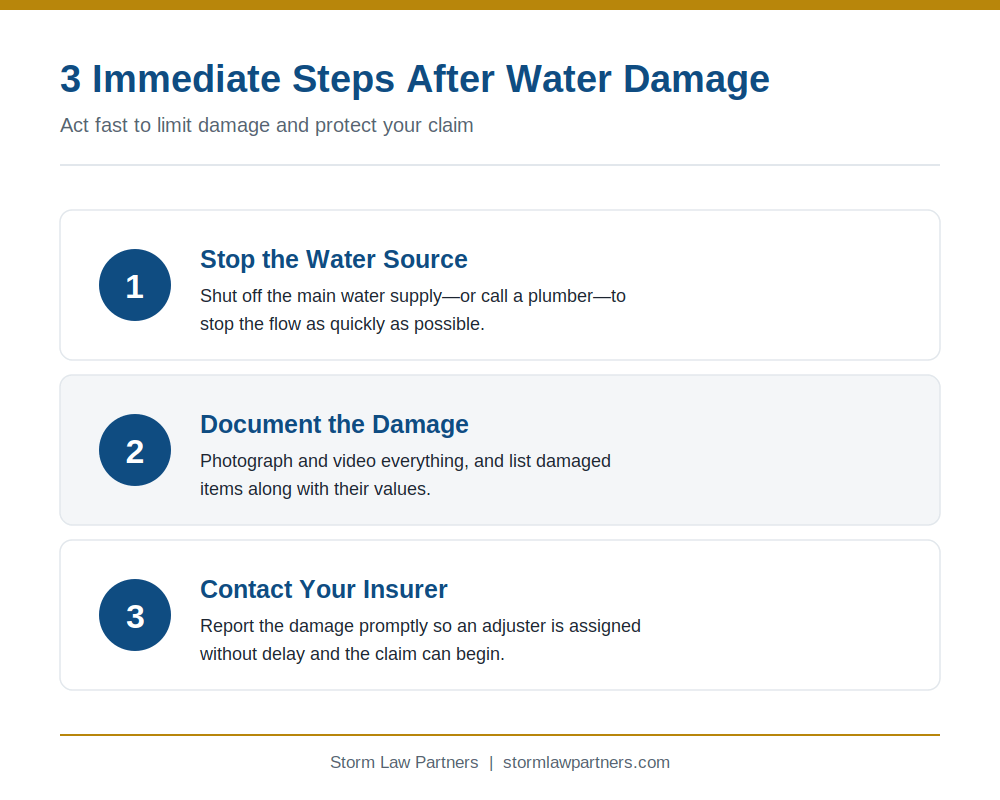
When water damage strikes, swift action is crucial to minimize the impact and start the recovery process. The first few hours are critical for preventing further damage and ensuring your safety. Here are the immediate steps you should take.
Stop the Source of Water
Identifying and stopping the source of water should be your immediate focus. If a pipe bursts or a roof leak is causing the issue, turn off the main water supply to prevent further flooding. If the source is unclear, consult a professional plumber to assess and fix the situation. Addressing the source promptly can greatly reduce the extent of the damage and make your water damage claim more manageable.
Document the Damage Thoroughly
Documenting the damage thoroughly is crucial for a successful insurance claim. Take clear photos and videos of all affected areas and damaged items, and create a detailed inventory of the damage to your property and belongings, including structural issues, water-stained walls, and ruined furniture.
Email these documents to your insurance agent and claims adjuster right away to expedite the process. Detailed documentation helps ensure your coverage includes all necessary repairs and replacements.
Contact Your Insurance Company Promptly
After documenting the damage, contact your insurance company immediately. Prompt reporting ensures efficient processing and quick assignment of an insurance adjuster, preventing delays in the claims process. Your insurer may also recommend local water damage restoration companies for immediate repairs and mold remediation.
Click to contact our property damage lawyers today
Understanding Your Insurance Policy
Familiarizing yourself with the details of your insurance policy is crucial for navigating the claims process. Knowing what is covered and what is excluded helps manage expectations and prepares you for discussions with your insurance adjuster.
Types of Water Damage Covered
Homeowners insurance typically covers various types of sudden water damage, such as burst pipes and unexpected roof leaks. Knowing the specifics of your policy can help you make informed decisions when filing a claim—our guide on whether home insurance covers water damage walks through what’s typically included. Policies often differ, so reviewing your coverage details is important.
Common Exclusions in Policies
Insurance policies often have exclusions that can affect your claim. Common exclusions include gradual damage from maintenance issues or wear and tear. Knowing these exclusions helps you avoid surprises during the claims process and stay aware of any coverage limits.
Importance of Flood Insurance
Standard homeowners’ insurance does not cover flood damage from natural events. A separate flood insurance policy provides crucial coverage for flood-related damage that homeowners’ policies exclude. Homes in high-risk flood areas are particularly vulnerable, so carrying both flood and homeowners insurance provides more comprehensive protection against water damage.
Complete a Free Case Evaluation form now
Working with Your Insurance Adjuster
An insurance adjuster assesses the damage and negotiates settlements. Working effectively with your adjuster can significantly influence the outcome of your claim. A detailed contractor’s report about the condition of the damaged areas can aid discussions with your insurer and add credibility to your claim.
Preparing for the Adjuster’s Visit
Being prepared is key to a successful adjuster visit. Gather your insurance policy, photos, videos, receipts, and details of any temporary repairs. Submitting a detailed inventory of damaged items per your insurer’s guidelines helps the adjuster accurately assess the loss and can streamline the claims process.
Communicating Effectively
Effective communication with your insurance adjuster is crucial for a fair settlement. Maintain a calm and professional demeanor, document all interactions, and provide access to your compiled documentation. Knowing your coverage helps you manage expectations and ask pertinent questions. Avoid admitting fault or discussing liability during these conversations.
Negotiating the Settlement
Persistence and thorough evidence are key to negotiating a fair settlement. If you receive an initial offer, make sure it covers all repair estimates and potential hidden issues before accepting. Detailed documentation and clear communication support your case—and if your insurer won’t treat you fairly, understand your rights about suing an insurance company for denying a claim.
When to Hire a Public Adjuster
Hiring a public adjuster can be valuable, especially for large or complex claims.
Benefits of Hiring a Public Adjuster
Public adjusters work on behalf of the claimant, using their expertise to secure higher offers from insurance companies. Their specialized knowledge of water and flood damage claims can significantly increase settlement amounts and streamline the process. A qualified public adjuster can make a significant difference in the outcome of your claim.
Choosing the Right Public Adjuster
Choosing the right public adjuster is essential for maximizing your settlement. Ensure they are licensed and experienced, and check their credentials and client reviews before hiring.
Click to contact our property damage lawyers today
Managing Repairs and Restoration
After settling your claim, the focus shifts to repairs and restoration. Proper management is crucial to return your property to its pre-loss condition.
Selecting Contractors
Hiring reputable contractors is essential for quality repairs. Ensure they are licensed and insured, read online reviews, and ask for references. Obtain written quotes to ensure accuracy in repair costs. These steps help avoid further issues and ensure the work is done correctly.
Monitoring the Repair Process
Managing the repair process effectively ensures the property is restored to its pre-loss condition. Regular communication with contractors and vigilant oversight ensure repairs meet quality standards and timelines. Address potential health risks, such as mold growth, to protect occupants’ well-being.
Addressing Health Risks
Health risks, such as mold growth, must be addressed promptly after water damage. Effective monitoring during the drying process is critical to ensure materials dry adequately. Regular visits by specialists can greatly improve the efficiency of the drying process and the overall quality of the restoration.
Avoiding Future Water Damage
Preventing future water damage protects your home and avoids costly repairs. Regular maintenance and the installation of preventive systems can significantly reduce the risk.
Regular Maintenance
Regular maintenance, such as inspecting appliances and plumbing components, can identify potential leaks before they become serious problems. Routine inspections and advanced technology can significantly reduce the risk of water damage.
Installing Preventive Systems
Installing systems such as leak detection and automatic shutoff valves can prevent water damage. These systems alert you to leaks early and automatically shut off the water supply, minimizing damage and repair costs. Installing them proactively can save significant resources and protect your home from unforeseen water damage.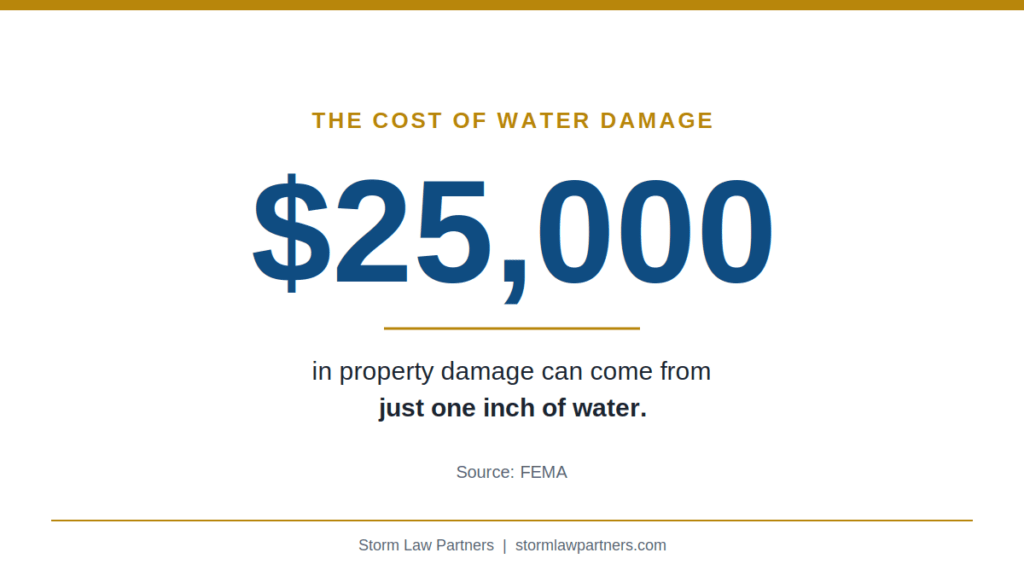
According to FEMA, just one inch of water can cause up to $25,000 in property damage. This figure highlights why accurate and fair insurance settlements are so important for homeowners dealing with water damage claims.
Relevant Case Law
In State Farm Lloyds v. Johnson, 290 S.W.3d 886 (Tex. 2009), the Texas Supreme Court addressed an insured homeowner’s right to dispute the method and scope of a property damage assessment through the policy’s appraisal process. This precedent is often cited when negotiating disputed water damage claims and reinforces the value of legal representation when needed.
Real-World Case Example
In Houston, Texas, a homeowner filed a claim after a severe pipe burst during the 2021 winter storm. Despite clear documentation and timely filing, the initial settlement offer was just 40% of the repair estimate. With legal assistance and an independent adjuster’s report, the settlement was increased by over $30,000, fully covering restoration costs. This underscores the importance of documentation and professional advocacy when dealing with insurance adjusters after water damage.
Pro Tips from First-Party Insurance Attorneys
- Preserve Damaged Property: Do not discard damaged items until the adjuster has inspected them. Keep them as evidence to support your claim.
- Request the Adjuster’s Report: Ask for a written copy of the adjuster’s findings. This gives you a chance to identify omissions or undervalued items.
- Understand ACV vs. Replacement Cost: Know the difference in how your insurer reimburses claims. Replacement cost policies generally yield higher payouts.
- Track All Additional Living Expenses (ALE): If water damage forces you out of your home, keep all receipts for temporary lodging, meals, and transport—these are often reimbursable.
- Request a Reassessment: If you disagree with the adjuster’s estimate, request a second evaluation or hire an independent estimator to provide a counter-assessment.
Summary
Dealing with an insurance adjuster after water damage is far more manageable when you act fast and stay organized. Stopping the water source, documenting every loss, understanding your policy’s coverage and exclusions, and preparing thoroughly for the adjuster’s visit all strengthen your position. When a claim is large or disputed, a public adjuster or an attorney can help you push for a fair settlement.
That same diligence protects you afterward by choosing reputable contractors, monitoring repairs, addressing mold and other health risks, and installing preventive systems to avoid the next loss. Persistence and thorough documentation are the keys to a fair outcome.
Frequently Asked Questions
What should I do first after discovering water damage?
Stop the water at the source, usually by shutting off the main water supply, then document the damage thoroughly and contact your insurance company to begin the claims process.
Does homeowners’ insurance cover water damage?
It typically covers sudden, accidental water damage such as burst pipes and unexpected roof leaks. Gradual damage and flooding are usually excluded, and flooding from natural events requires a separate flood insurance policy.
How do I prepare for the insurance adjuster’s visit?
Gather your insurance policy, photos and videos of the damage, receipts, a detailed inventory of damaged items, and notes on any temporary repairs you made. Having everything ready helps the adjuster assess the loss accurately.
Should I hire a public adjuster?
For large or complex claims, a licensed public adjuster works on your behalf and can often increase the settlement amount. Verify their license, experience, and client reviews before hiring.
What if the adjuster’s settlement offer is too low?
Don’t feel pressured to accept right away. Provide your repair estimates and documentation, request a reassessment or an independent estimate, and consider seeking legal help if the insurer won’t offer a fair settlement.
Call or text (832) 323-3000 or complete a Free Case Evaluation form